
News
Africa’s first Women’s World Cup kicks off this week as Morocco welcomes the world

By Samuel Ahmadu
This week, history unfolds under the North African sun.
As the 2025 FIFA U-17 Women’s World Cup kicks off in Morocco, a new chapter opens, not just for the host nation, but for an entire continent. For the first time in history, a Women’s World Cup, at any level, is being staged on African soil. It’s a moment thick with symbolism, legacy, and forward momentum, not only for women’s football, but for gender equality in sport across Africa and the Arab world.
And no country is more fitting for this watershed than Morocco, a rising powerhouse in African football and a nation that has steadily redefined what’s possible in women’s sport.
#image_title
From Shadows to Spotlight: Morocco’s Accelerated Rise
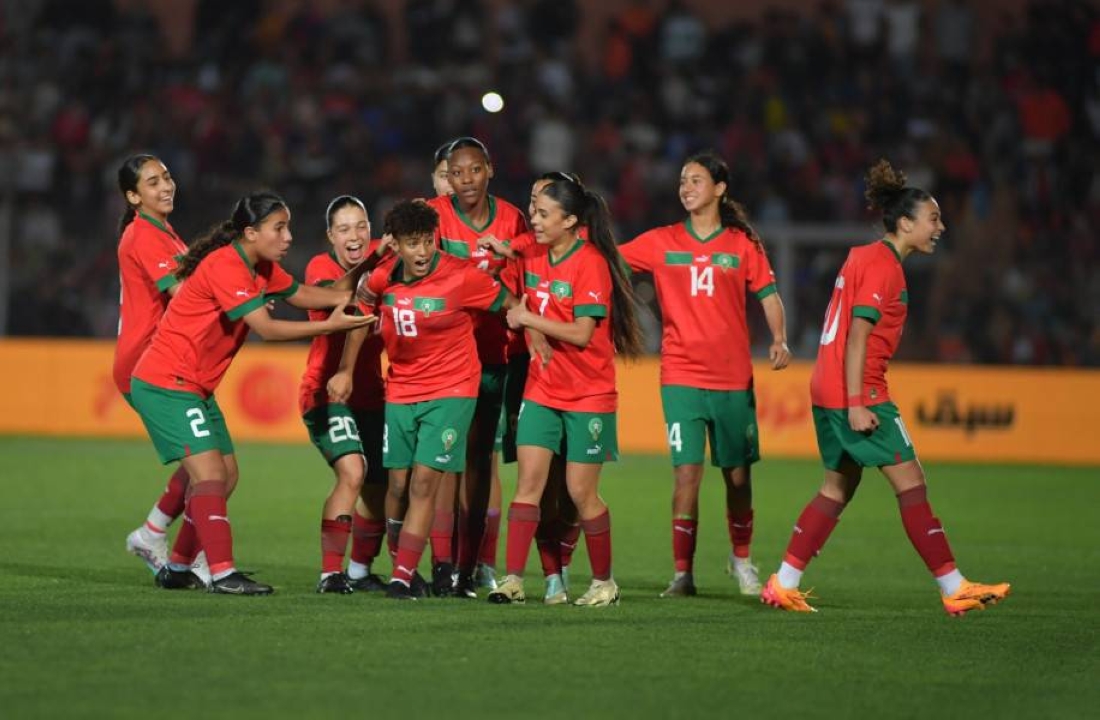
Just seven years ago, Morocco’s women’s football presence barely registered on the continental radar. Today, it stands as a beacon of investment, ambition, and transformation.
The turning point came in 2022, when Morocco hosted the Women’s Africa Cup of Nations (WAFCON), the first time a North African country staged the tournament. The Atlas Lionesses stunned the continent by reaching the final, beating regional giants Nigeria along the way, and packing stadiums with record-breaking crowds. That tournament was more than sport, it was a cultural shift.
A year later, the Moroccan women’s national team made its FIFA Women’s World Cup debut (Australia & New Zealand 2023), becoming the first Arab nation to qualify, the first to win a match, and advancing to the Round of 16. Nouhaila Benzina made history as the first player to wear a hijab in a senior FIFA tournament, a powerful symbol of representation on the world stage.
This rise was no accident. The Royal Moroccan Football Federation (FRMF) has invested heavily in women’s football – building domestic leagues, creating training academies, improving coaching standards, and scouting both local and diaspora talent. The Mohammed VI Football Academy, one of Africa’s finest, has become a talent pipeline not just for men’s but increasingly for women’s football.

#image_title
Why This Tournament Matters: A First for Africa
While Morocco has been climbing the ranks, Africa as a continent had never hosted a Women’s World Cup, until now.
The 2025 FIFA U-17 Women’s World Cup is not just another tournament. It’s a proof of concept, that Africa can host, organize, and celebrate women’s football at the highest level. It is the culmination of years of effort to break down structural and cultural barriers that have long held back the women’s game.
23 of the world’s top U-17 teams now descend on Morocco for three weeks of competition across world-class venues in Rabat, and Sale. The matches will be broadcast globally, but the impact will resonate most strongly in classrooms, schoolyards, and neighborhoods across Morocco and the continent, where thousands of young girls will see players who look like them competing at the top.
This tournament is the first in a multi-year hosting commitment by Morocco, which has been awarded the rights to host the U-17 Women’s World Cup until 2030, a long-term investment in growing the game at youth level.
A Strategic Bid for the Future: Eyes on 2031
Make no mistake, Morocco’s hosting of the U-17 tournament is also a strategic stepping stone.
There is growing speculation that Morocco will formally bid to host the 2031 FIFA Women’s World Cup, potentially as a solo host or part of a multi-nation North African or Euro-African bid. Having already co-won the rights to host the 2030 Men’s FIFA World Cup alongside Spain and Portugal, Morocco is now laying down a dual legacy – becoming a global football host and a leader in women’s football development.
Hosting the 2031 edition would be monumental – the first senior Women’s World Cup in Africa, on the heels of the continent’s first youth women’s tournament. It would be the ultimate reward for a nation that has shown consistent commitment to growing the women’s game from the grassroots to the global stage.
A Cultural Shift, Not Just a Sporting One
Beyond the matches and medals, Morocco’s journey reflects deeper social change.
In a region where women in sport have long faced cultural, religious, and institutional barriers, the visibility of female athletes on such a massive stage is revolutionary. Morocco’s players have become household names, their faces on billboards, their matches televised in prime time. They’ve also become symbols of progress – urban and rural, Arab and Amazigh, veiled and unveiled, redefining what it means to be a woman in football.
The support has come not just from football fans, but from across civil society. Government ministries, private sponsors, and media outlets have begun to treat women’s football with the seriousness it deserves. Youth clubs are seeing surging enrollments of girls. Local communities are organizing school competitions, viewing parties, and girls-only training sessions. The shift is generational and it’s only beginning.
#image_title
What the U-17 Women’s World Cup Can Leave Behind
This month’s tournament offers more than a trophy. It offers a legacy:
Inspiration: Thousands of young African girls will watch this tournament believing they, too, can reach the world stage.
Infrastructure: Stadiums, training centers, and transport systems upgraded for the U-17 tournament will support domestic football for years to come.
Credibility: Morocco strengthens its case as a trusted FIFA tournament host, paving the way for bigger events.
Equality momentum: Media coverage, sponsorships, and public dialogue around women in sport are growing—faster than ever before.
A Moment That Belongs to a Continent
Though Morocco wears the hosting badge, this moment belongs to Africa.
From Accra to Algiers, Nairobi to Niamey, the continent is watching. It sees a future where women’s football is not just tolerated, but celebrated. Where investment is not an afterthought, but a strategy. Where stadiums fill not just for the men’s national team, but for the women who represent their nations with just as much pride and power.
This U-17 Women’s World Cup is the first. It must not be the last.
#image_title
Continental Contenders: Africa’s Five Nations Take on the World
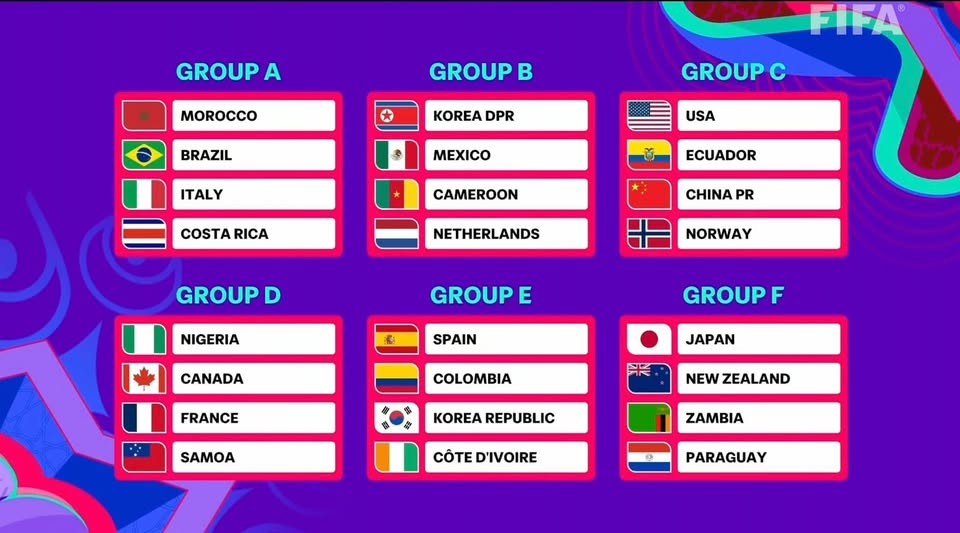
Teams from 24 countries across six confederations will contest the 2025 FIFA U‑17 Women’s World Cup in Morocco, running from 17 October to 8 November. The African contingent features hosts Morocco, joined by Cameroon, Nigeria, Côte d’Ivoire, and Zambia, five teams carrying the hopes of a continent. Morocco, drawn in Group A, will open the tournament in Rabat against Brazil, before taking on Italy and Costa Rica.
Nigeria finds itself in a challenging Group D with France, Canada, and Samoa. Cameroon faces a tough test in Group B against North Korea, Mexico, and the Netherlands. Côte d’Ivoire must navigate a daunting Group C featuring Spain, Colombia, and South Korea, while Zambia lines up in Group E alongside Japan, New Zealand, and Paraguay.
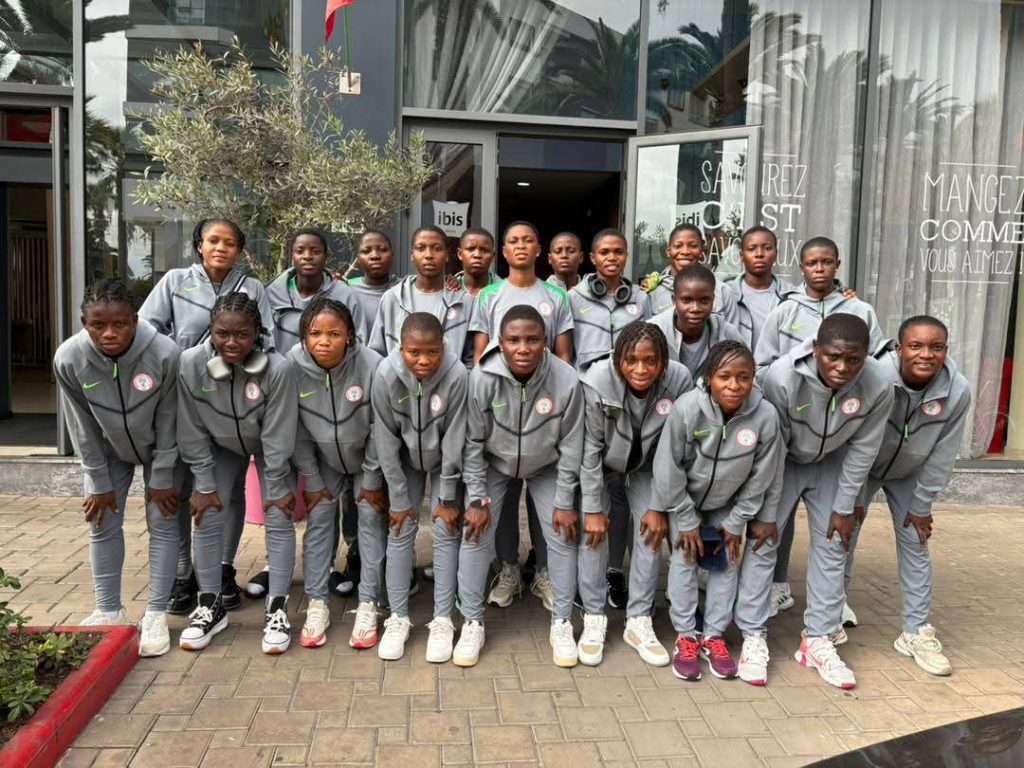
For the African sides, the road ahead is demanding but full of potential. Nigeria, with its rich youth pedigree and World Cup experience, will be tipped to progress – its clash with France may well decide the group. Cameroon, though up against seasoned opposition, has shown enough in recent years to pose a serious threat.
Morocco, buoyed by home support, faces high expectations; their opening encounter with Brazil will serve as a critical benchmark of their development. Côte d’Ivoire and Zambia enter as underdogs, but with opportunities to disrupt the hierarchy, whether through resilience in defense or bold play in transition. As the tournament unfolds, Africa won’t just be represented, it will be aiming to compete, contend, and make history on home soil.
Final Whistle: Africa Steps Onto the Global Stage
Morocco’s journey is both a roadmap and a rallying cry: when vision meets investment, when a federation believes in its women, and when a country opens its arms to change, the results can rewrite history.
As the ball rolls across Moroccan turf this week, it carries the weight of history and the hopes of a continent finally stepping into the light of global women’s football.
Africa has waited long enough. The future is here.
