Latest News
Super Eagles Drop to Fifth in Africa as Squad Value Declines

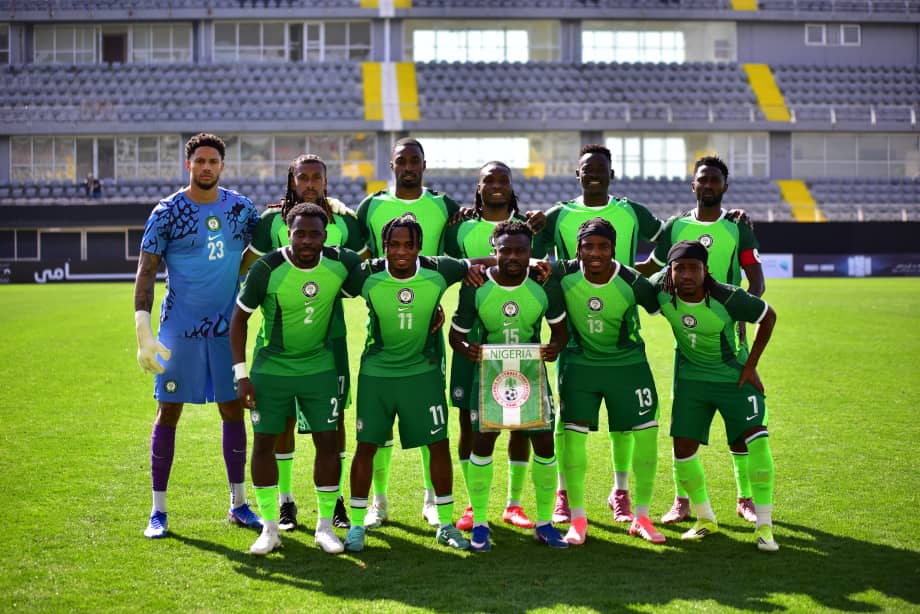
Nigeria’s national football team, the Super Eagles, have fallen to fifth place among Africa’s most valuable squads in the latest valuation released by Transfermarkt, marking a notable shift in the continent’s football hierarchy.
Once ranked as Africa’s most valuable team just three years ago with an estimated worth of €339 million, Nigeria’s squad value has dropped significantly to €209.08 million. This decline now places them fifth on the continent and 33rd globally.
The reduction has been largely driven by falling market values among several key players. Victor Boniface, previously valued at €45 million, has seen a sharp decrease, while others such as Taiwo Awoniyi, Umar Sadiq, Kelechi Iheanacho, and Wilfred Ndidi have also recorded declines, collectively impacting the team’s overall valuation.
Despite this downturn, Nigeria still boasts a number of high-value players. Victor Osimhen remains the standout asset at €75 million, followed by Ademola Lookman (€40 million), Calvin Bassey (€28 million), Alex Iwobi (€25 million), and Raphael Onyedika (€23 million). Their presence underlines the depth of talent still available within the squad.
Across Africa, Senegal now lead the rankings with a total squad value of €456.80 million, ahead of Morocco (€437.00 million) and Ivory Coast (€410.90 million). Algeria occupy fourth place with €227.75 million, narrowly edging Nigeria. Ghana sit in sixth position with €191.28 million, while South Africa are ranked 17th overall.
Senegal’s rise has been fueled by strong international performances and increasing player valuations, reflecting the country’s growing influence in global football.
The latest rankings highlight a broader trend in African football, where squad values are increasingly shaped by performances in Europe’s top leagues, effective player development systems, and sustained international success.
While Nigeria’s drop is significant, their continued presence in Africa’s top five suggests they remain a competitive force on the continent. However, the shift signals the need for improved player performance and strategic development if the Super Eagles are to reclaim their position at the summit of African football.