Latest News
Tangier Med: The Engine of Morocco’s Maritime Power and Economic Growth

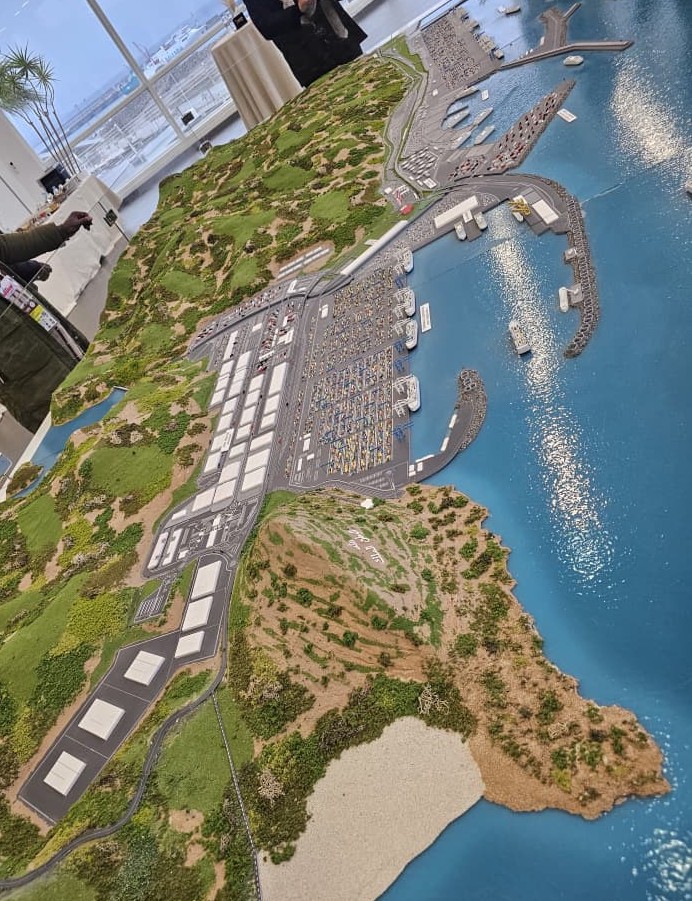
Beyond agriculture and tourism, Morocco’s economy is firmly anchored in industry and services, with logistics playing a central role. At the heart of this strength are the Kingdom’s 14 seaports, which handle an estimated 95% of Morocco’s foreign trade —a striking indicator of the country’s growing logistical and commercial power.
Among these ports, Tangier Med stands out as the crown jewel. Strategically located on the Strait of Gibraltar, at the crossroads of the Atlantic Ocean and the Mediterranean Sea, the Tangier Med port complex has become one of the most important maritime hubs in Africa and the Mediterranean, capable of accommodating the latest generation of mega-ships.
Commissioned in 2007, Tangier Med is today connected to 180 ports in 70 countries worldwide, with 30–32% of its traffic linked to Africa. This extensive network has propelled Morocco to 20th place in the global maritime connectivity index by 2024, underscoring its rising status in international trade and shipping.
The port complex is the product of a massive US$13.56 billion investment, comprising US$5.25 billion in public funding and US$8.31 billion in private investment. Supported by an attractive logistics free zone, a highly competitive industrial platform, and robust interconnection infrastructure, Tangier Med generates over 130,000 jobs and produces annual revenues estimated at US$17.22 billion.
Its multimodal platform boasts impressive capacities:
Up to 9 million containers annually
7 million passengers
700,000 TIR trucks
Export of 1 million vehicles manufactured in Morocco per year
The port also features a major hydrocarbon terminal, with a storage capacity of 532,000 cubic metres of refined products across around twenty tanks and a processing capacity of 15 million tonnes.
Tangier Med’s connectivity extends deep into Europe, with direct links to six cities across Spain, France, and Italy, while a dedicated railway line connects the port to Morocco’s major cities for the transport of vehicles, hydrocarbons, and containers.
Equally significant is the port’s industrial ecosystem. The Tangier Med industrial platform hosts nearly 1,400 companies, generating an annual business volume exceeding €16 billion in 2024. These firms operate across key sectors including automotive, aeronautics, agri-food, logistics, and textiles, reinforcing Morocco’s position as a competitive manufacturing and export base.
In a landmark step toward sustainability, Tangier Med has, since January 2024, transitioned to 100% renewable energy usage. The port is also supported by a hydroelectric dam, supplying clean energy not only to the port itself but also to surrounding communities.
Today, Tangier Med stands as a symbol of Morocco’s economic ambition, combining strategic geography, world-class infrastructure, industrial competitiveness, and environmental responsibility—firmly positioning the Kingdom as a leading logistics and trade hub for Africa, Europe, and the wider world.