Latest News
CAF reveals likely result of Nigeria’s petition against DR Congo

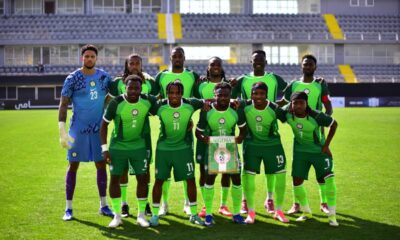
Nigeria’s hopes of qualifying for the 2026 FIFA World Cup have taken a new twist following the Nigeria Football Federation’s (NFF) decision to file an official complaint with FIFA over the eligibility of players fielded by the Democratic Republic of Congo (DR Congo).
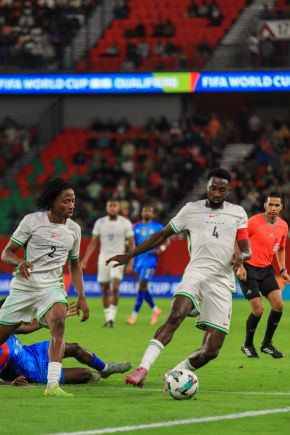
The Super Eagles suffered a painful penalty shootout defeat to the Leopards in the African final of the World Cup playoffs, a result that appeared to end Nigeria’s qualification dream. However, the NFF is now challenging the legitimacy of that outcome, accusing DR Congo of fielding ineligible players during the decisive tie.
At the centre of the complaint are several DR Congo internationals, including former Manchester United defenders Axel Tuanzebe and Aaron Wan-Bissaka. The NFF argues that FIFA was misled into approving their eligibility, citing Congolese national legislation, which reportedly prohibits the simultaneous possession of Congolese and European citizenship.
Nigeria is pushing for DR Congo to be disqualified, a move that would see the Super Eagles take the Leopards’ place as Africa’s representative in the inter-confederation playoffs scheduled for March 2026 in Mexico.
However, a source within the Confederation of African Football (CAF) has played down the likelihood of such an outcome, stressing that FIFA’s regulations are based on official documentation, not domestic nationality laws.
“Nigeria has filed an official complaint against Congo because of the presence of players like Wan-Bissaka and Tuanzebe, who obtained Congolese nationality even though Congolese law prohibits combining its nationality with a European nationality at the same time,” the CAF source told Filgoal.
“FIFA requires that a passport be issued for the nationality in order to change nationality. As long as the players have obtained passports, there is no problem.”
The source further indicated that even if administrative breaches were established, the results of the World Cup qualifiers are unlikely to be overturned.
“If violations are proven, they will not affect the results of the World Cup qualifiers. This is different from the Equatorial Guinea case involving Emilio Nsue, where sanctions were imposed because the violation occurred before the qualifiers began.
“In this situation, changing the outcome would require restarting the qualification process, which is not under consideration. The most likely outcome would be a financial fine or a formal warning.”
Pending FIFA’s final decision, DR Congo remain on course to face the winner of the inter-confederation playoff between New Caledonia and Jamaica, with a place at the 2026 World Cup still at stake.