Latest News
Amaju Pinnick calls for goverment freedom in Nigerian football

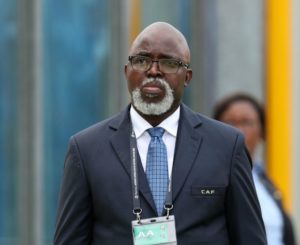
Former Nigeria Football Federation (NFF) President Amaju Pinnick has called for a major restructuring of Nigerian football, insisting that domestic league clubs must be freed from government ownership and control to secure the future of the game.
Pinnick made the remarks during an interview on ARISE News, where he described the proposed changes as a complete reset of Nigerian football, stressing that reforms must extend beyond the administration of the national federation to the domestic league and its clubs.
“There’s a complete reset when it comes to Nigerian football,” he said.
The former NFF president argued that the domestic league must occupy a central position in the restructuring process, describing it as the foundation for sustainable football development in the country.
“It’s not going to be switched to just the Federation. It’s also going to be the league. The league is a major component.
“The league is the future. The league is everything. The league will also trickle down to the junior teams among the various clubs,” Pinnick said.
He further disclosed that removing league clubs from government control was among the issues being considered as part of the proposed reforms.
“Taking the league’s clubs out of government and all that stuff. So, there’s a lot going on, trust me,” he added.
His comments revive a longstanding debate about the ownership and administration of professional football clubs in Nigeria, many of which are financed and controlled by state governments.
The model has remained a major feature of the domestic game, with several clubs depending on public funding for salaries, logistics, recruitment and other operational expenses.
Pinnick’s position points towards a shift to a more commercially driven structure in which clubs could operate with greater administrative independence, attract private investment and develop sustainable revenue streams.
However, the former NFF president did not provide specific details on how the proposed transition would be implemented, the timeline involved or the ownership framework being considered.
He maintained that the restructuring must recognise the importance of the domestic league and its relationship with youth development, arguing that stronger clubs would contribute to the growth of younger players.
The remarks come amid renewed discussions about the direction of Nigerian football, including the need for improved league administration, stronger club structures, grassroots investment and a more sustainable football economy.