
English Premier League
Al Ahly’s Amouta question grows after Pyramids defeat

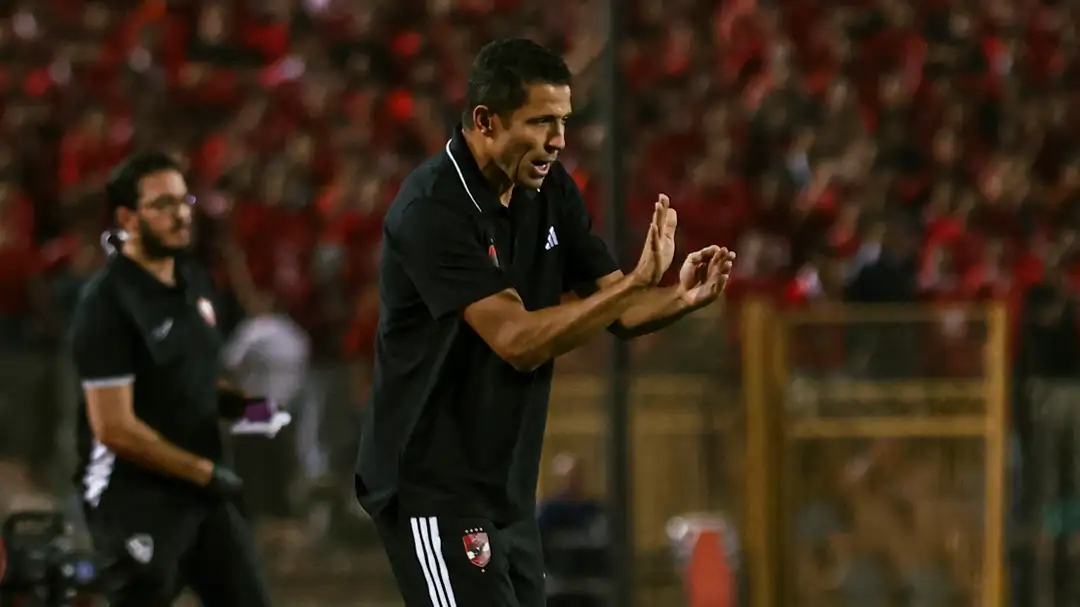
Al Ahly’s 2-0 defeat by Pyramids FC has intensified questions over Hussein Amouta’s suitability for the club and the way its football management has handled successive managerial appointments.
The result exposed a team unable to impose its rhythm against a direct title rival. Pyramids FC, by contrast, appeared clearer in their approach and more capable of carrying it out.
The defeat did not surprise some Al Ahly supporters, who have repeatedly criticised Amouta since his appointment. Their frustration has grown because the team has yet to recover the powerful identity expected after last season ended without a trophy.
The central issue is not whether Amouta should be judged on one match, but whether his ideas fit Al Ahly and whether the club appointed the right coach for a team that has lacked a settled football identity in recent seasons.
Amouta’s record is strong. He led Wydad to the 2017 CAF Champions League and the Moroccan league title, won the 2021 African Nations Championship with Morocco’s home-based national team and took Jordan to the 2023 AFC Asian Cup final, the best result in the history of the Jordan national team.
Those achievements, however, do not necessarily mean his methods suit Al Ahly. Amouta is not clearly a defensive coach, but neither does he base his football on sustained possession and relentless pressing. His teams are built around organisation and tactical discipline, with plans adjusted to the opposition and space exploited in transition.
That flexibility can be valuable in knockout matches. At Al Ahly, though, it raises questions about whether he can lead a side expected to take initiative and dictate games rather than simply adapt to its opponents.
Against Pyramids FC, Al Ahly struggled to move the ball quickly, build out from the back and turn possession into genuine threats. Defensive transitions were poor, with weaknesses in the distances between midfield and defence, recovery speed and cover behind advanced players. The problems suggested a recurring failure in spacing and responsibilities rather than isolated individual errors.
Amouta is not solely responsible. The squad still has important gaps, including the need for a striker who can finish chances and move between centre-backs, a strong and quick defender capable of covering space, and a holding midfielder who can protect the centre, cover advancing full-backs and help build attacks under pressure.
Those weaknesses have become more significant since the club failed to retain Wessam Abu Ali. Inconsistent performances from the current options have made the team’s balance depend too heavily on the opponent and the day.
The absence of key players has also reduced Amouta’s choices. Emam Ashour, who can carry the ball forward and break defensive lines, missed the previous four matches against Pyramids FC for technical reasons before returning to the squad and making an ineffective substitute appearance in this game. Injuries to other players have added to the issue, raising questions about why Al Ahly’s many recent signings have not provided reliable balance.
Since Pitso Mosimane left, Al Ahly have appointed Ricardo Soares, Marcel Koller, Jose Ribeiro, Youssef Turki and now Amouta, while Emad El Nahhas has taken temporary charge on more than one occasion. Each coach has different demands and a different philosophy, yet the club has not clearly defined the identity it wants to build or the criteria behind its appointments.
The early numbers show why results alone cannot settle the debate. In Amouta’s first 14 official domestic and continental matches, Al Ahly recorded 11 wins, two draws and this first defeat, scoring 30 goals and conceding seven. Koller had the same record of 11 wins and two draws in his first 13 games, although Amouta’s team had the better scoring figures.
Koller remained in charge for about 960 days and managed 161 matches, according to Transfermarkt. Against Pyramids FC, he recorded five wins, two draws and one defeat in eight meetings, with Al Ahly scoring 13 and conceding nine. Amouta has lost his only meeting with the club 2-0, an initial sample too small for a historical comparison but enough to provide an early test.
The concern for Al Ahly supporters is less about the number of victories than the team’s shape, defensive weakness and lack of connection between the lines. The wider question is whether Al Ahly can impose its personality in major matches. The uncomfortable conclusion is that the club no longer looks intimidating.
That responsibility rests with Mahmoud El Khatib, the board and everyone overseeing football. A managerial appointment should follow a clear decision on the team’s style, squad requirements, suitable players and the time needed to build a project. Replacing coaches without improving recruitment and planning simply leaves each new manager with the previous one’s problems while demanding immediate results.
Amouta must still show he can produce football worthy of Al Ahly’s size and history. But the club must also prove that it chose him for a defined project and is prepared to meet his needs, rather than making the manager the permanent scapegoat.
The question is no longer only whether Amouta suits Al Ahly. It is whether Al Ahly know which coach they want and what sort of team they are trying to build.