
English Premier League
Desire Doue’s knee injury prompts questions over possible link to dental problem

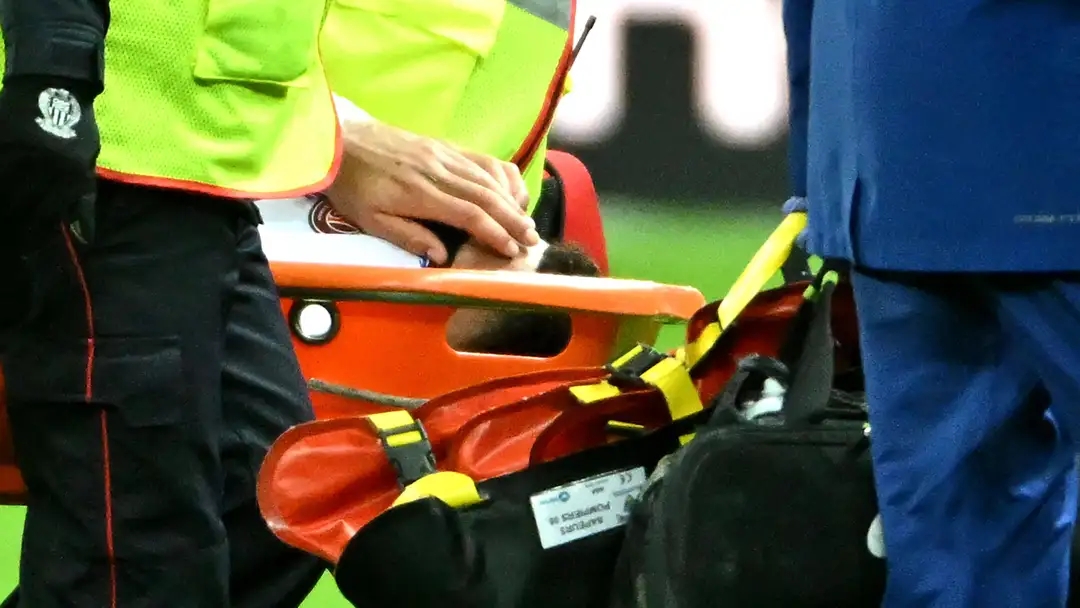
Desire Doue’s anterior cruciate ligament injury has raised unusual questions about whether it could be connected to a dental injury suffered days earlier.
The Paris Saint-Germain forward damaged the anterior cruciate ligament in his right knee during the club’s match against Nice, shortly after being treated for an injury to his teeth while playing for France against Italy on 12 November.
RMC Sport reported that several specialists it contacted had discussed whether the two injuries might be linked, although there is no established evidence that the dental problem caused the ligament damage.
Doue scored Paris Saint-Germain’s second goal as they led 2-1 before going off in the closing stages of the first half. The injury is a significant setback for the 21-year-old, who had scored 6 goals and delivered 4 assists in his previous 10 matches in all competitions.
Pascal De March, an associate member of the National Academy of Dental Surgery, said intense physical demands could leave athletes more vulnerable to injury.
Professional competition, he explained, pushes players towards the limits of their physical capacity, meaning any underlying imbalance could coincide with general fatigue. However, he stopped short of claiming that the dental injury or any inflammation it caused directly led to Doue’s torn ligament, saying it would be unlikely to prove such a connection over 10 days.
Rafael Betach, an associate professor at New York University who specialises in dental implants, rejected the suggestion that Doue’s teeth were responsible for the knee injury. He said the way the player fell and the manner in which his foot struck the ground provided a more convincing explanation.
Dental pain may affect chewing and concentration during training, Betach added, but that does not necessarily indicate a direct relationship with ligament injuries. He also dismissed the possibility that the mouthguard worn by Doue had altered his bite in a way that affected the rest of his body.
De March said problems with dental occlusion could influence balance and awareness of body position. Some studies had identified possible effects on overall balance, he said, while a mouthguard should generally help maintain stability.
Doue wore an orthodontic device to hold the injured tooth in place after being struck by the elbow of Davide Frattesi during France’s match against Italy.
The incident has also drawn comparisons with Paris Saint-Germain team-mate Khvicha Kvaratskhelia, who suffered an anterior cruciate ligament injury and appeared with new teeth during the break between seasons. Betach warned against assuming a link between cosmetic dental changes and sporting injuries, noting that significant alterations require a period of adjustment so a player can adapt to them.