Connect with us

Latest News

How Rabat, Morocco became the capital of World Football

Published

on

How Rabat, Morocco became the capital of World Football
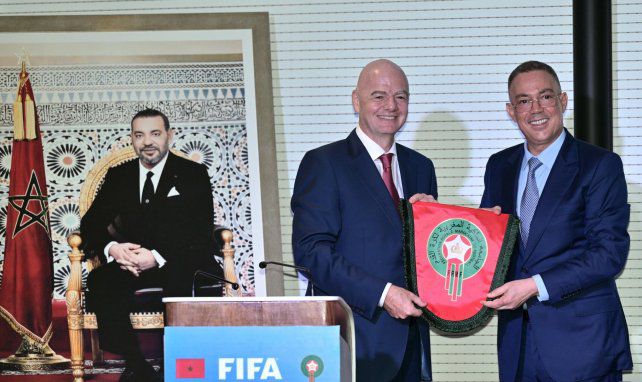
There is something deeply symbolic about the fact that the FIFA Elective Congress — the gathering that will determine who leads the world’s most powerful football institution — will take place in Africa. In Morocco, to be precise. In Rabat, a city that already hosts FIFA’s first regional office on the continent. For African football, this is not coincidence. It is the result of sustained, deliberate effort.

Over recent years, Morocco has carved out a path that few emerging football nations have managed with such consistency. A World Cup semi-final in 2022, an Olympic bronze medal in 2024, a U20 World Cup title in 2025, and a triumphant Africa Cup of Nations (AFCON) victory on home soil in 2025 — the record is impressive, but it only tells part of the story. What truly defines the Moroccan model is the infrastructure beneath the surface: a national network of training academies, grassroots and school football programmes reaching rural communities, a rapidly growing women’s game, and modernised stadiums built to international standards.

In choosing Rabat for its elective congress, Federation of International Football Association (FIFA) is not simply acknowledging results. It is recognising a method. It is validating an approach to football governance that could, in many respects, serve as a reference for other African federations on their own path of development.

For the continent as a whole, this is a powerful signal: African football is no longer content to participate from the margins. It organises, it hosts, it shapes decisions. And it does so from Rabat — at the heart of a Maghreb that has quietly become one of world sport’s most dynamic centres.


author avatar
Samuel Ahmadu
Samuel Ahmadu is a distinguished multimedia journalist and women's football expert with over 15 years of experience in the industry. On the back of domestic engagement since 2008, he began his international career journey at Goal.com in February 2014, where he served as an African women's football correspondent for nearly eight years. During his tenure at Goal.com, Samuel covered major events such as three Women's Africa Cup of Nations (2016, 2018, 2022) and the 2015 FIFA Women's World Cup in Canada plus 2018 FIFA World Cup in Russia. His work at Goal.com earned him widespread acclaim, particularly for his in-depth profiles of African football stars, notably Asisat Oshoala, whose rise he documented from her early years to her breakthrough at the FIFA U20 Women's World Cup in 2014. Prior to his role at Goal.com, Samuel freelanced for various print and broadcast media outlets in Nigeria, including Graphics Newspaper, Radio Nigeria, Grace FM, and Savid Newspaper. His extensive experience and expertise led to his appointment to the Nigeria Football Federation's Standing Committee on Women's Football Development from 2016 to 2018. Since February 2018, Samuel has been the Social Media Manager for Nigeria's women's national teams.In 2019, Samuel joined the Confederation of African Football (CAF) as a women's football content contributor and was promoted to Women's Football Editor in 2021. His contributions to women's football continued as he worked as a Media Consultant for Content Creation and Editorials at the 2022 CAF Women's Champions League. Currently, Samuel also serves as the spokesman for the Nigeria Women Football League, further solidifying his influence and dedication to the growth of women's football in Africa.