
English Premier League
Italy FA in talks with elite coach as Maldini outlines new Azzurri vision

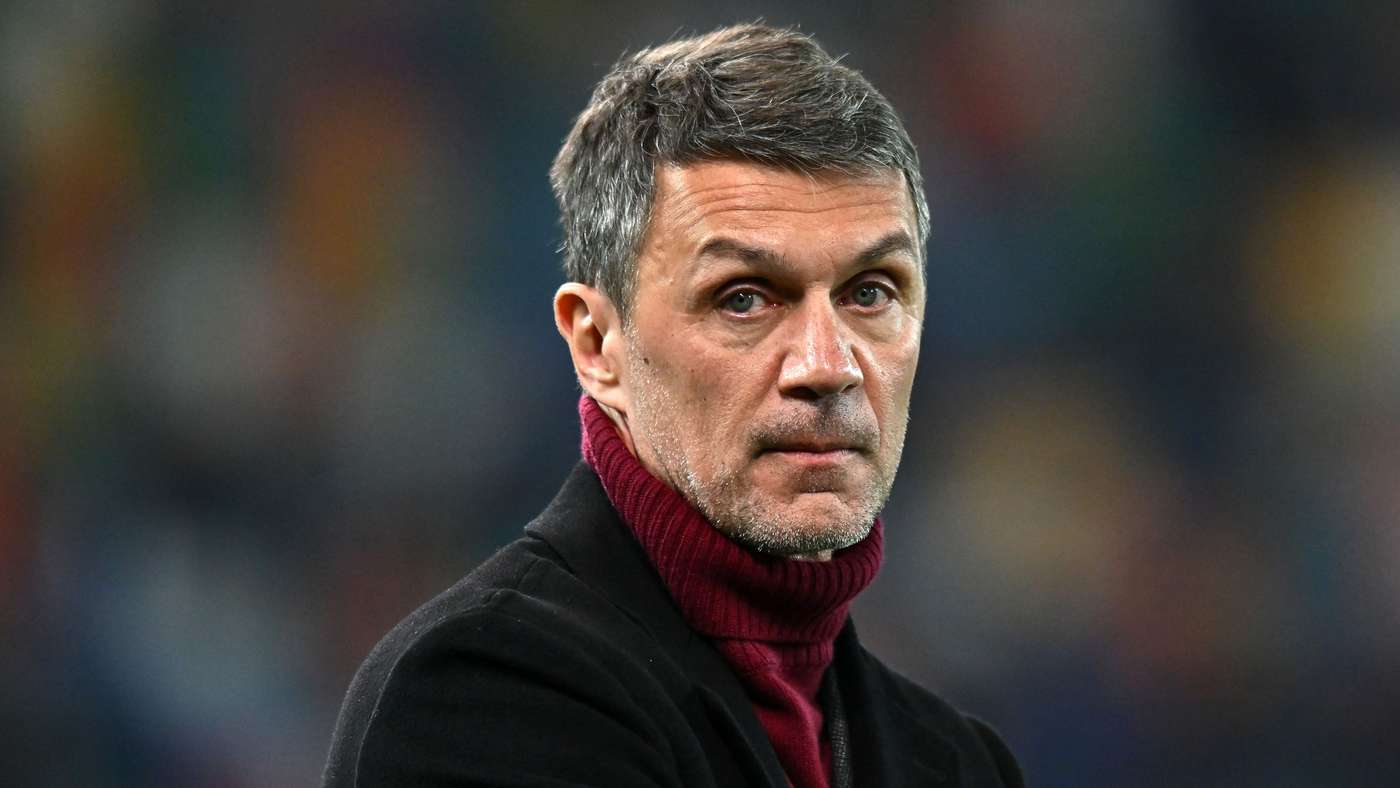
Paolo Maldini has confirmed that the Italian Football Federation (FIGC) is already negotiating with a leading candidate to become Italy’s next head coach, and that those talks are not limited to Pep Guardiola, whose name has dominated recent speculation.
The newly appointed FIGC technical director, speaking alongside his advisor Leonardo at a press conference on Thursday, said the federation has contacted “some of the best coaches in the world” as it works to appoint a successor for the Azzurri. Both men declined to reveal the identity of the preferred candidate, insisting that the focus for now is on the long-term project rather than the individual.
Maldini, quoted by Football Italia after a meeting between FIGC president Giovanni Malago and representatives of Serie A clubs, said the federation hopes to reach a decision within days but will not rush into the wrong appointment.
“The ideal situation is to have the coach in place before the end of the week,” Maldini said. “But even better than that is to wait for the person we really want. There is urgency, but not the kind that pushes us into a hasty decision.”
Contacts with Ancelotti and Guardiola
Maldini revealed that the FIGC’s approach has begun at the very top end of the coaching market, starting with Carlo Ancelotti before moving on to Guardiola.
“We cannot deny that we spoke to Carlo Ancelotti before we contacted Pep Guardiola,” he said. “It was natural to start with those we consider the best in the world, to understand whether they might be available.”
No details were given on how those conversations progressed, nor on Guardiola’s current stance regarding the Italy job. Ancelotti has recently renewed his contract with Brazil, a commitment which Maldini acknowledged would make any immediate move “extremely difficult”.
Earlier media reports in Italy had suggested that Guardiola was likely to turn down the role after asking for a salary of €20m per year – double what the Italian side are understood to have put on the table. Maldini and Leonardo did not comment directly on those figures, but their comments underlined that Guardiola is not the only high-profile name under consideration.
Maldini explains decision to take FIGC role
Maldini also spoke about why he accepted the position of FIGC technical director, stressing that the breadth of the new project was decisive after a long period of reflection.
He said: “I felt the weight of the responsibility, and that is why it took time for me to be convinced. When the Italy national team calls you, it becomes difficult to say no.”
The former defender highlighted his long-standing relationship with Leonardo and their shared footballing ideas as a key foundation for the federation’s new strategy.
Leonardo targets overhaul of Italian football philosophy
Leonardo made clear that the FIGC’s ambitions go well beyond simply choosing a new head coach. He said the priority is to reshape the entire philosophy of Italian football, creating a joined-up structure from youth academies through to the senior national side.
He argued that, in recent years, Italy has lacked a unified strategy across its footballing pyramid, with age-group sides, academies and the senior team often working in isolation rather than following a single blueprint.
The federation now intends to set out clear technical principles that will apply from academy level upwards, with a particular focus on improving individual skills and encouraging a more proactive, attacking style of play. Leonardo suggested that Italian football has fallen behind other nations in this regard.
The identity of the next Italy coach, he stressed, must fit this vision rather than define it.
“The new coach has to be in harmony with this idea,” Leonardo said. “The main criterion will not be the name itself, but how much the coach’s ideas match the technical project the federation is implementing.”
While acknowledging that building such a comprehensive structure will take time, Leonardo underlined the need to move quickly in preparing the senior side, given the upcoming competitive commitments facing Italy on the international stage.
