
English Premier League
CAS ruling over Senegal-Morocco final raises fresh questions for CAF

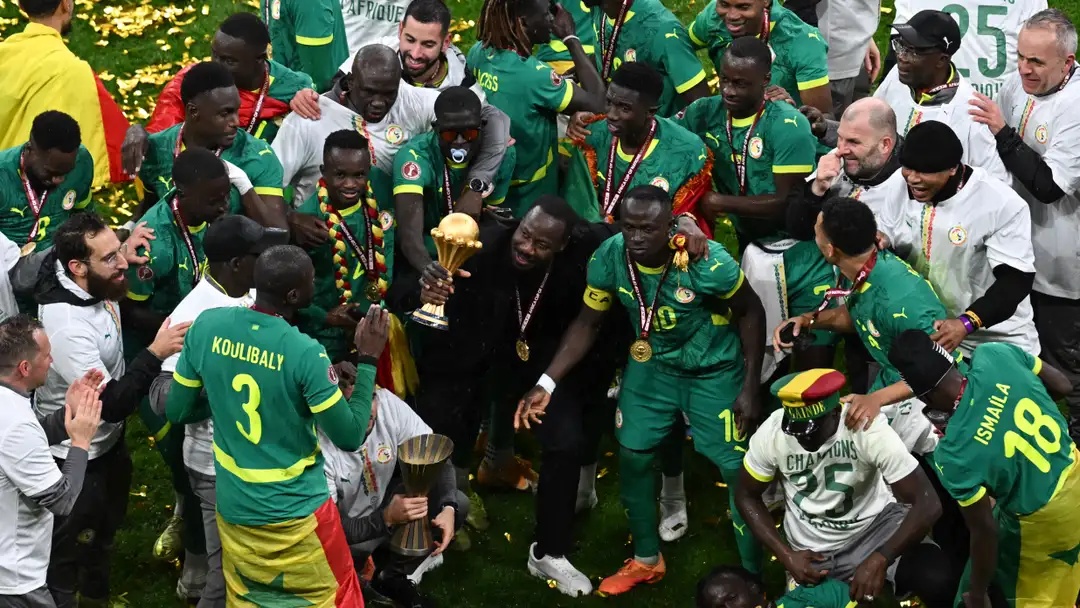
The Court of Arbitration for Sport (CAS) has reopened the debate over the credibility of the Confederation of African Football (CAF) after overturning a decision to strip Senegal of the 2025 Africa Cup of Nations title and award Morocco victory by default.
The ruling prompted strong criticism from prominent French journalist Benoit Perocheau, who said the case had damaged the institutions responsible for governing football in Africa.
Speaking on France 24, Perocheau described the CAS decision as a major setback for CAF. The Lausanne-based sports tribunal did not uphold the ruling issued by CAF’s appeal committee following the final between Senegal and Morocco.
At the heart of the dispute was the referee’s authority during the match. CAS concluded that the referee had exclusive responsibility for assessing what was happening on the pitch and deciding whether the game had ended permanently or could continue.
The tribunal noted that Congolese referee Jean-Jacques Ndala had not formally declared the match over after Senegal’s players left the field in protest at the penalty awarded to Morocco. Instead, he allowed the game to resume, meaning Senegal could not be considered to have forfeited the match under the interpretation adopted by CAF’s appeal committee.
Commenting on the consequences of the ruling, Perocheau said: “African institutions insult African football, which has shown continuous progress over the past 10 years.”
He added that the case had produced a winner and a loser, but argued that the biggest loser was African football’s governing structure, particularly CAF, because of the way the dispute had concluded before CAS.
Perocheau also questioned how much confidence could now be placed in CAF after it lost the case. In his view, a ruling that overturns a previous decision by the organisation’s appeal committee raises serious questions about the credibility of its judgments and the way it manages continental competitions.
His criticism extended beyond the disputed final. He referred to CAF’s previous announcement that the Africa Cup of Nations would be held every four years rather than every two, before the organisation abandoned that plan. Perocheau described the reversal as another example of decisions that raise doubts about CAF’s administration of African football.
The Royal Moroccan Football Federation said it would challenge the CAS ruling using every available legal avenue. In an official statement, it expressed surprise and condemnation, arguing that the judgment had failed to consider Morocco’s claim that German arbitrator Ulrich Haas had communicated with the president of the Senegalese Football Federation 48 hours before the decision was issued.
The federation also said the ruling had not properly taken into account FIFA and IFAB regulations concerning players leaving the pitch without the referee’s permission, and the responsibilities that may follow from such an action.