
English Premier League
Philippe Diallo backed by European football bodies to challenge Gianni Infantino for FIFA presidency

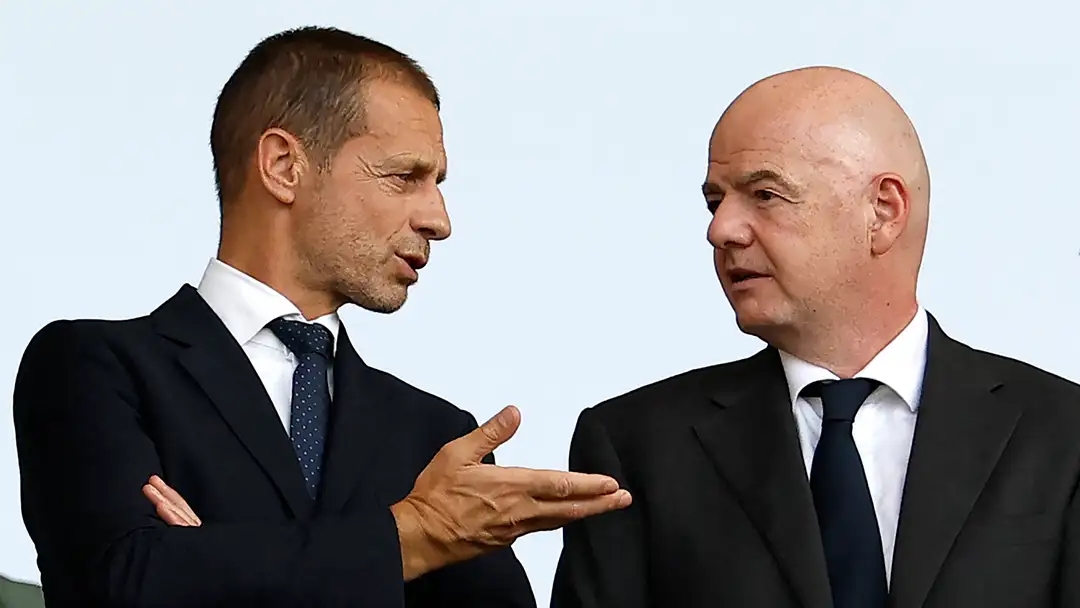
European national associations represented on UEFA’s Executive Committee and the FIFA Council have unanimously backed Philippe Diallo’s candidacy for the FIFA presidency election in March 2027.
The decision was made at a meeting chaired by UEFA president Aleksander Ceferin, according to an official statement published by UEFA. The associations formally invited Diallo to enter the election and pledged their full support.
Diallo, president of the French Football Federation, has held senior positions at several levels of the game. He previously led the organisation representing France’s professional football clubs, served on the board of the Ligue de Football Professionnel and worked within FIFA’s dispute-resolution structures.
He became president of the French Football Federation before joining UEFA’s Executive Committee in 2023.
The European associations said the decision came amid serious concerns about the direction of FIFA. They called for renewed unity and greater trust across the global football community, while insisting that FIFA must make the development of the game in every part of the world its central priority.
They also said the organisation should uphold the highest standards of governance and work closely with its member associations, confederations and all other stakeholders in football.
The associations expressed complete confidence in Diallo’s ability to provide the leadership needed to meet those objectives.
Diallo accepted the invitation to stand for the FIFA presidency. His candidacy is due to be formally ratified by the Executive Committee of the French Football Federation at a meeting on Wednesday.
Growing scrutiny of FIFA governance
The election is entering a particularly sensitive phase as disagreements grow over the way FIFA is run. Infantino has faced widespread criticism over decisions concerning the commercial rights to major tournaments and the organisation’s decision-making processes.
The latest dispute began with a proposal put forward by Infantino in July 2026 to establish a commercial entity containing rights linked to the World Cup and other competitions. The plan would have allowed private-sector investors to acquire stakes in the entity.
It prompted widespread objections over the transparency of the process and concerns that national associations and confederations had not been consulted sufficiently before the proposal was presented.
Infantino subsequently withdrew the project as opposition increased. However, its effects continued, with several parties viewing the controversy as evidence of deeper weaknesses in FIFA’s governance rather than simply a disagreement over an investment plan.
The episode also raised questions about the limits of the FIFA president’s authority and the independence of the organisation’s affiliated institutions.