
Latest News
Argentina’s late winner against England cleared by VAR analysts after controversy erupts over Messi challenge

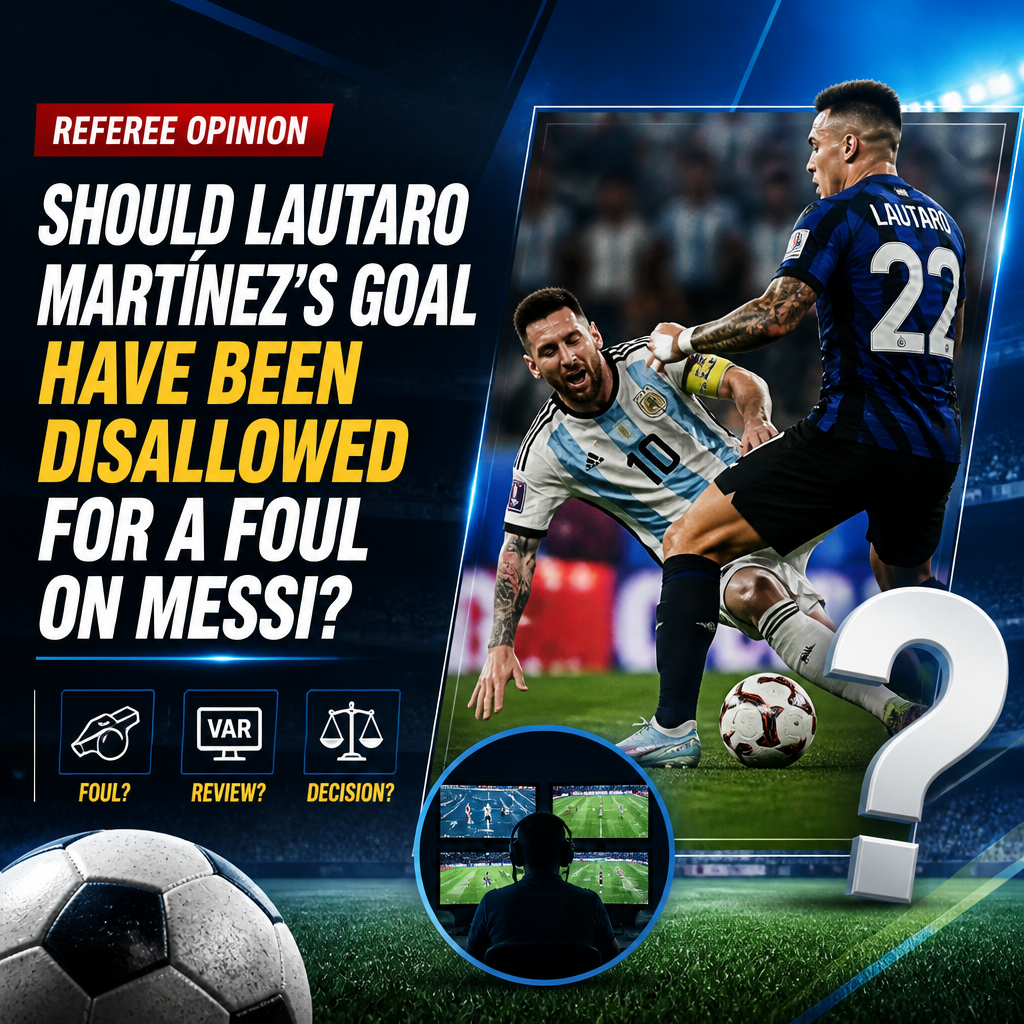
Argentina’s dramatic stoppage‐time winner against England in the World Cup semi‐final has been backed as legitimate by specialist VAR analysts, despite a storm of criticism that it should have been disallowed for a foul by Lionel Messi.
Lautaro Martinez’s 92nd‐minute header on Wednesday sent Argentina into Sunday’s final against Spain, but the build‐up – a contested duel between Messi and England’s Jed Spence – has become the focal point of post‐match debate.
Refereeing analysis network “Archivo VAR”, which focuses on contentious video assistant referee incidents, has publicly defended the decision to let the goal stand, arguing there was no infringement by the Argentina captain in the seconds before the cross was delivered.
Messi–Spence coming-together ‘not a foul’
The decisive moment came deep into added time when Messi won the ball near the right side of England’s penalty area before whipping in a precise cross that Martinez powered into the net.
Critics, including several refereeing pundits, insisted the goal should have been overturned, claiming Messi committed a foul on Spence in the build‐up. Some argued that the Argentine forward had stepped on the England defender’s foot as they contested the ball.
However, Archivo VAR rejected that interpretation after reviewing the incident.
On its X (formerly Twitter) account, the network wrote: “هل هناك مخالفة من ميسي على سبينس قبل هدف لوتارو؟.. الايجابة لا” – “Is there a foul by Messi on Spence before Lautaro’s goal? The answer is no.”
It added: “على الرغم من ان المشهد في بعض اللقطات قد يجعل الامر يبدو وكان هناك دهس بالقدم، الا ان هذا الفعل لم يحدث” – “Although in some angles it may seem like there is a stamp on the foot, this action did not occur.”
The network concluded that Spence’s discomfort appeared unrelated to any contact by Messi.
“In reality, Spence complains of cramp in the opposite leg, the left,” Archivo VAR said, arguing that his reaction on the pitch had been misinterpreted as evidence of a foul.
Questions also raised over Argentina’s opener
The second goal was not the only decision to come under scrutiny. Argentina’s first strike, a long‐range effort by Enzo Fernandez after a lay‐off from Messi, was also questioned in some quarters.
The move began with Messi receiving the ball close to the edge of the penalty area before teeing up Fernandez, who unleashed a powerful shot into the top corner. Dissenting voices claimed Messi had been in an offside position when he was first found by his team‐mate.
Archivo VAR again moved to clarify the situation, stating that the Argentina captain had been correctly judged onside when the ball was played to him.
“The Argentine star was further from the goal than almost all the England defenders,” the network said, arguing that the pitch markings provided a clear visual guide. “It is enough to look at the grass lines and notice how close Messi is to one of them.”
The network maintained that both goals were consistent with the Laws of the Game and with VAR protocols on clear and obvious errors.
Semi-final overshadowed by officiating debate
Argentina’s 2-1 victory over England secured their place in the World Cup final, but much of the reaction has focused on officiating rather than tactics or performances.
Former referees and analysts have appeared on television and social platforms dissecting the key incidents frame by frame, while fans of both sides have traded arguments online over whether England were unfairly treated or Argentina were simply more clinical at crucial moments.
FIFA has not issued any formal statement on the specific incidents, and there is no indication that the match officials will face sanctions or downgrades as a result of their decisions.
With Argentina now preparing to face Spain in Sunday’s showpiece, the debate over the semi‐final calls is likely to linger – but, for now, the specialist verdict from Archivo VAR is that both Messi‐involved goals were valid, and Argentina’s place in the final stands beyond dispute.
