
Latest News
Debate over Falklands erupts as Argentina goalkeeper Emiliano Martinez rejects political motive for England win

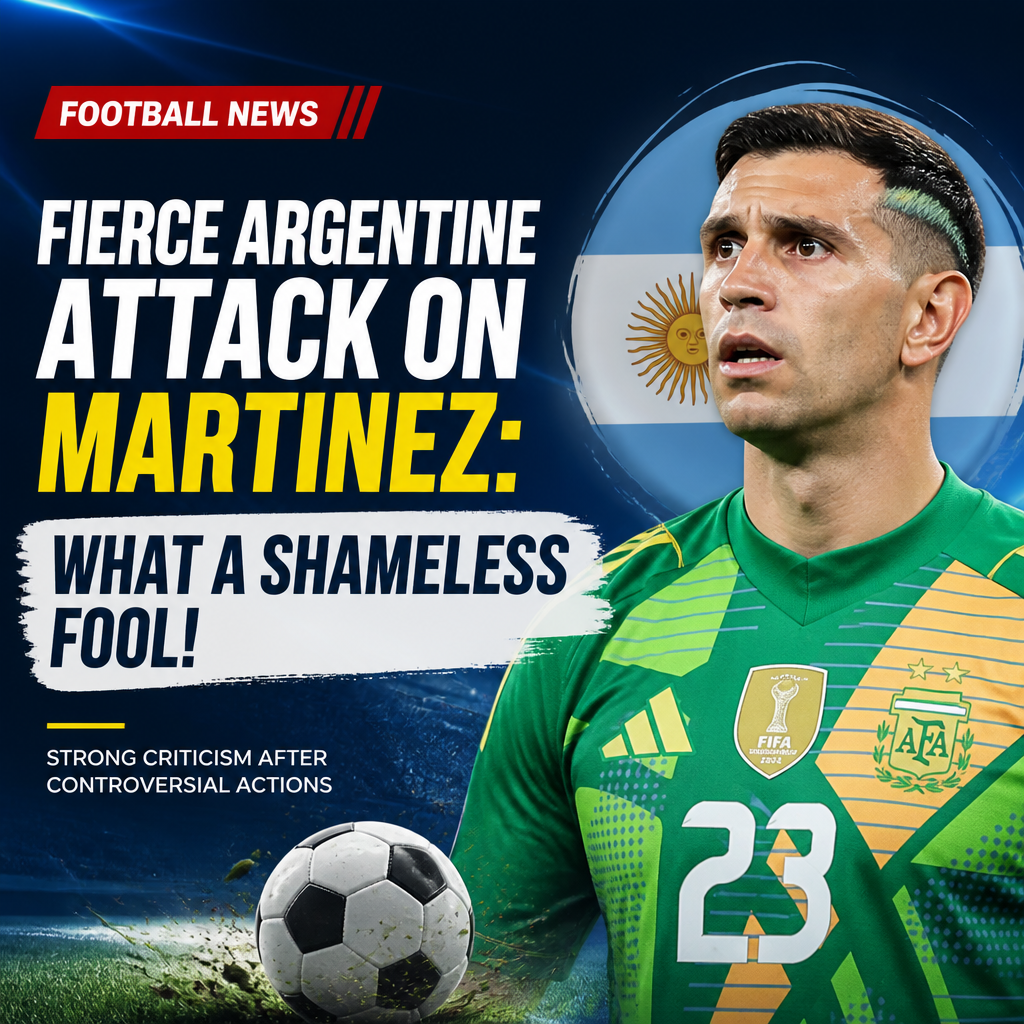
Argentina’s World Cup hero Emiliano “Dibu” Martinez is at the centre of a storm at home after distancing himself from the Falklands/Malvinas issue in the wake of his country’s dramatic 2-1 semi-final victory over England.
The Aston Villa goalkeeper’s comments stand in sharp contrast to several team-mates, who openly dedicated the win to the victims of the 1982 Falklands War and declared the islands “Argentinian forever”.
Argentina beat England 2-1 on Wednesday to reach the 2026 World Cup final, immediately reviving emotive memories of past football clashes and the decades-long sovereignty dispute with the UK.
But Martinez, speaking to Argentine channel “D-Sports”, firmly rejected the idea that either Diego Maradona’s legacy or the Falklands conflict had driven the comeback.
“I don’t think that’s the reason. That’s in the past. I wasn’t even born then,” said Martinez, who is 33 and was born in 1992. He argued that the team’s reaction on the pitch was rooted instead in “experience” and coping with “big matches”, rather than any desire for historical revenge.
Social media backlash
The goalkeeper’s stance triggered furious reactions on social media in Argentina, where the Falklands/Malvinas question remains highly sensitive more than four decades after the war.
On X, one user wrote sarcastically: “You can’t say something like that. He is shameless,” while another shouted: “What an idiot you are, Dibu Martinez,” underscoring the depth of feeling among some supporters.
The 1982 conflict over the South Atlantic islands, known in Spanish as Islas Malvinas, left 904 people dead and continues to shape Argentine political and national identity. Public figures are often expected to align with the country’s official position that the islands are an integral part of Argentina.
Martinez’s refusal to link the semi-final win to that narrative has therefore been interpreted by critics as a lack of patriotism, even as many others focus primarily on his performances, which have been crucial to Argentina’s run to the final.
Team-mates dedicate win to war dead
While Martinez avoided the subject, several colleagues put the Falklands/Malvinas front and centre in their post-match comments.
Defender Lisandro Martinez said: “لم نكن لنخذل الشعب الارجنتيني” – “We were never going to let the Argentine people down” – in remarks widely shared in Argentina.
Midfielder Leandro Paredes went further, explicitly tying the result to the sovereignty claim. “ستبقى جزر فوكلاند ارجنتينية الى الابد. كنا نلعب من اجل امتنا باكملها، ورغم اننا اردنا ايصال رسالة مفادها انها مجرد مباراة كرة قدم، الا اننا كنا نعلم انها كانت حدثا بالغ الاهمية لبلدنا”.
Translated, his message was: “The Falkland Islands will remain Argentinian forever. We were playing for our entire nation, and although we wanted to convey the message that it was just a football match, we knew it was an extremely important event for our country.”
Their words were widely praised by many fans and commentators, who saw them as honouring those who died in the conflict and reaffirming Argentina’s long-standing claim.
Banner could draw FIFA scrutiny
The political tone was reinforced on the pitch after the final whistle, when Giovani Lo Celso and other players held up a banner reading: “Las Malvinas son parte de la Argentina” – “The Falkland Islands are part of Argentina.”
The gesture could attract disciplinary attention from FIFA, which explicitly bans political, religious or personal slogans and statements inside stadiums during its competitions.
Images of the banner were quickly circulated around the world, fuelling debate over whether the celebrations had crossed the line between national pride and prohibited political messaging.
Martinez, by contrast, kept entirely silent on the issue in public, further highlighting the divide within the squad’s post-match responses.
Final result may reshape perception
The row now leaves Argentina’s first-choice goalkeeper at odds with a vocal segment of the national fan base at a moment when he is also being hailed for his decisive saves during the tournament.
How lasting the backlash will be may depend heavily on what happens next.
Argentina will play the World Cup final on Sunday night. A victory in that match, delivering another world title, could significantly alter the public mood and overshadow the current controversy surrounding Martinez’s remarks.
Defeat, however, may prolong scrutiny of his comments and keep the debate over football, nationalism and the Falklands/Malvinas dispute at the forefront of Argentina’s conversation long after the final whistle.
