
Latest News
Harry Kane’s World Cup heartbreak: England captain left facing brutal questions over legacy after Argentina defeat

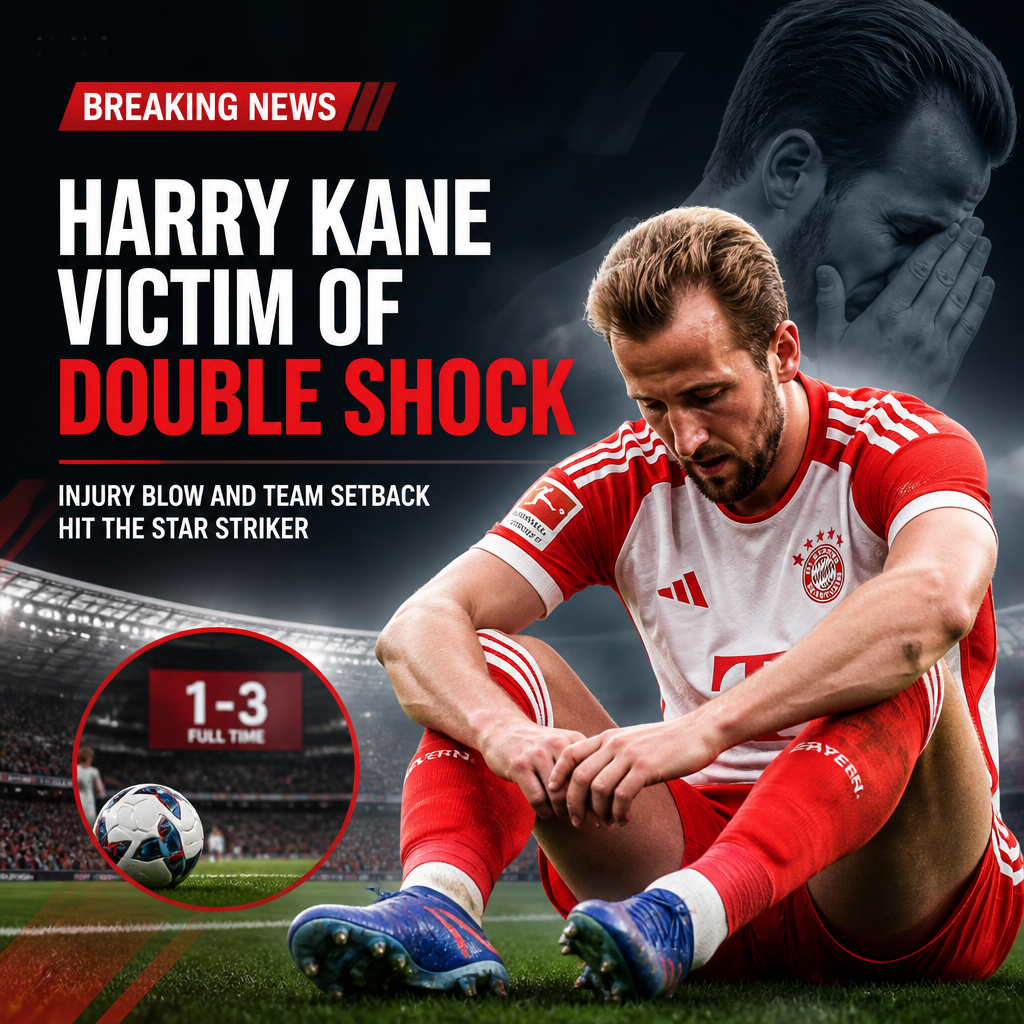
Harry Kane’s hopes of securing a first World Cup, a Ballon d’Or and a defining chapter in his England career may all have slipped away in the space of 90 punishing minutes against Argentina.
England were minutes from the 2026 World Cup final, leading 1-0 and seemingly on course for a shot at history, when the match turned and Lionel Scaloni’s side came roaring back to win 2-1. For Kane, approaching his 33rd birthday, the loss looks like far more than a single painful defeat.
According to Goal, the reverse has cast a long shadow over the future of England’s record goalscorer, transforming what had been a near-perfect club season with Bayern Munich into the backdrop for the most searching questions of his international career.
Silent question over Kane’s future
In the mixed zone after the match, Kane cut a dejected figure as he faced the media. Remarkably, the most obvious question – about his international future – did not come immediately, even though it was uppermost in the minds of many observers.
England had been within touching distance of a second consecutive World Cup final. Anthony Gordon’s 55th-minute goal capped one of the team’s strongest displays of the tournament’s latter stages, as they matched the world champions for discipline and organisation.
For more than an hour, England appeared capable of absorbing Argentine pressure and striking on the counter. But once ahead, they dropped dangerously deep, surrendered possession and invited wave after wave of attacks.
Scaloni later said his players had “smelt blood”, sensing that England were losing control. Argentina seized the initiative and turned the match around, leaving England stunned and Kane largely anonymous in the decisive moments.
Numbers that don’t tell the whole story
On paper, Kane’s contribution did not resemble that of a player tipped for the Ballon d’Or. He touched the ball just 26 times, completed nine passes, mustered a single shot on target and failed to have any touches inside Argentina’s penalty area.
Yet those figures only partly explain his evening. In a physical, attritional contest, Kane threw himself into duels, often outperforming some of Argentina’s midfielders in challenges and aerial battles. In the first half, that work helped England contain their opponents.
The demands of the match changed once England scored. Instead of merely contesting long balls and fouls, they needed a centre-forward who could hold possession, spring counters and punish the space behind Argentina’s back line. That never materialised.
Afterwards, Kane was candid about where things had gone wrong.
He said: “لسبب او لاخر، واجهنا صعوبة في الاحتفاظ بالكرة، كما لم ننجح في الضغط بالشكل المطلوب، وهو ما منح الارجنتين الزخم واتاح لها فرض سيطرتها على المباراة”.
The irony is that Kane himself was central to that problem. England needed either a striker quick enough to run away from markers and exploit the relative lack of pace in Argentina’s central defence, or one capable of relentlessly pressing from the front. Kane, for all his qualities as one of the game’s most complete forwards, has never been defined by speed.
As England retreated, he was drawn deeper to help defensively, drifting further from the danger zones where he is most effective.
Tactical questions for Tuchel
Many analysts argued that head coach Thomas Tuchel should have reacted sooner. As the tempo shifted and space opened up behind Argentina’s defence, the game seemed to call for a more mobile striker.
Instead, the German manager kept his captain on until the final moments. Kane, unable to change the course of the match, was reduced to a spectator to England’s collapse.
It was one of the most debated decisions after the final whistle, with critics insisting that the match slipped from England’s grasp without a decisive tactical intervention from the bench.
From record-breaking season to shattered dream
The brutal twist is that this World Cup disappointment came at the end of arguably the finest club season of Kane’s career.
At Bayern Munich, he led the team to the Bundesliga title by a 16-point margin, dismantling records at an unprecedented pace. He scored 58 goals in all competitions – the highest single-season tally in Bundesliga history – and finished with 36 league goals, a mark unmatched across Europe’s top five leagues that year.
Kane also became the fastest player ever to reach 100 goal contributions for Bayern, reinforcing his status as one of the most consistent strikers in modern football.
Those numbers put him firmly in the Ballon d’Or conversation, his statistics drawing comparisons with Lionel Messi, Cristiano Ronaldo and Robert Lewandowski at their peak. Had the award been based purely on personal data, he would have had one of the strongest cases of any English player since Michael Owen lifted the trophy in 2001.
But Bayern’s failure to overturn Paris St-Germain in the Champions League semi-finals weakened his hand. That left the World Cup as his golden opportunity to transform a spectacular season into a truly historic one.
Before the tournament, Kane acknowledged as much, saying: “بالتاكيد ساكون احد ابرز المرشحين. لقد حققت القابا هذا الموسم وسجلت عددا كبيرا من الاهداف، واذا فازت انجلترا بكاس العالم، فمن الطبيعي ان ترتفع فرصي بشكل كبير”.
In the group and knockout stages, the script appeared to be unfolding perfectly. Kane scored twice against Croatia, added another against Panama, struck twice more versus DR Congo and assisted against Mexico. Alongside Jude Bellingham, he formed the spine of Gareth Southgate’s – and then Tuchel’s – England.
Heading into the semi-final, he was just two goals behind Messi and Kylian Mbappe in the race for the Golden Boot. But against Argentina, he failed to score and scarcely influenced the game in attack, with his prospects in both the top-scorer and Ballon d’Or battles fading sharply.
Even a goal in the third-place play-off is unlikely to restore his position, especially with Messi contesting the final against Spain and potentially boosting his own claims further.
Kane returned to Germany without the World Cup, without the Golden Boot and, in all probability, without a decisive edge in the Ballon d’Or race – his hopes undone in a single night.
A legacy defined by what is missing
What makes this setback particularly harsh is the sense that it might have been his last genuine chance on the global stage.
When Kane finally left Tottenham for Bayern, many felt the move had come one or two years too late, after he had spent his peak in a side unable to consistently challenge for the biggest trophies. His performances in Munich have largely vindicated the switch, showing he remains among the elite and arguably reached a new peak in Germany.
He has long been meticulous about his conditioning, citing admiration for athletes in other sports who extended their careers through physical care. That discipline has convinced many he can maintain his level at club level for several more seasons.
International football, however, presents a harsher reality. Major tournaments arrive at the end of gruelling campaigns, with little scope to manage minutes. Knockout ties allow no second chances.
When England most needed their captain to tilt the semi-final in their favour, he was unable to do so. The tournament he had hoped would deliver both collective and individual glory instead may stand as the most agonising moment of his career.
On the numbers alone, Kane’s England legacy is formidable. He is the national team’s all-time leading scorer, closing in on 100 international goals – an unprecedented landmark for an English player. He is on course to surpass Peter Shilton’s appearance record of 125 caps, having already reached 121.
His World Cup record includes the most penalty goals in tournament history and the Golden Boot at Russia 2018.
But football’s greatest figures are ultimately judged by medals as much as statistics. Kane’s story with England is littered with near-misses: the missed penalty against France at the 2022 World Cup; criticism over his form at Euro 2024; and now the semi-final loss in 2026, when he entered in peak condition and still failed to shape the outcome.
Compared with legends who combined numbers with trophies – Messi with Argentina, Ronaldo with Portugal, Pele and Maradona with Brazil and Argentina, Thierry Henry with France – Kane’s resume still lacks the defining international title that changes how history views a player.
No clear successor – and no plans to walk away
England’s problems do not end with Kane. The national side faces an obvious shortage of top-level centre-forwards.
Tuchel’s 2026 squad included Ollie Watkins and Ivan Toney, both 30, and there is no clear, younger heir apparent to lead the line at the next World Cup or Euro 2028, when Kane will be 35. That reality makes it difficult to envisage England moving on from their captain in the short term.
Despite the criticism, he remains the most complete and experienced striker available, and his place is protected as much by the lack of alternatives as by his own stature.
Kane, for his part, has no intention of stepping aside.
“تمثيل المنتخب الوطني هو اكبر مصدر للفخر والسعادة بالنسبة لي، وهو اكثر ما احب القيام به. صحيح ان البطولة المقبلة لا تزال بعد اربع سنوات، وسابلغ الثالثة والثلاثين هذا الصيف، لكن ليونيل ميسي اثبت ان العمر ليس عايقا، فهو لا يزال يقدم مستويات مذهلة. لذلك لا اريد ان اضع حدودا لنفسي”، he said after England’s exit.
Those words underline his determination to keep fighting. Yet the physical demands of his position, and
