
Latest News
Toni Kroos sparks global debate with ‘Football won’ verdict after 2026 World Cup final

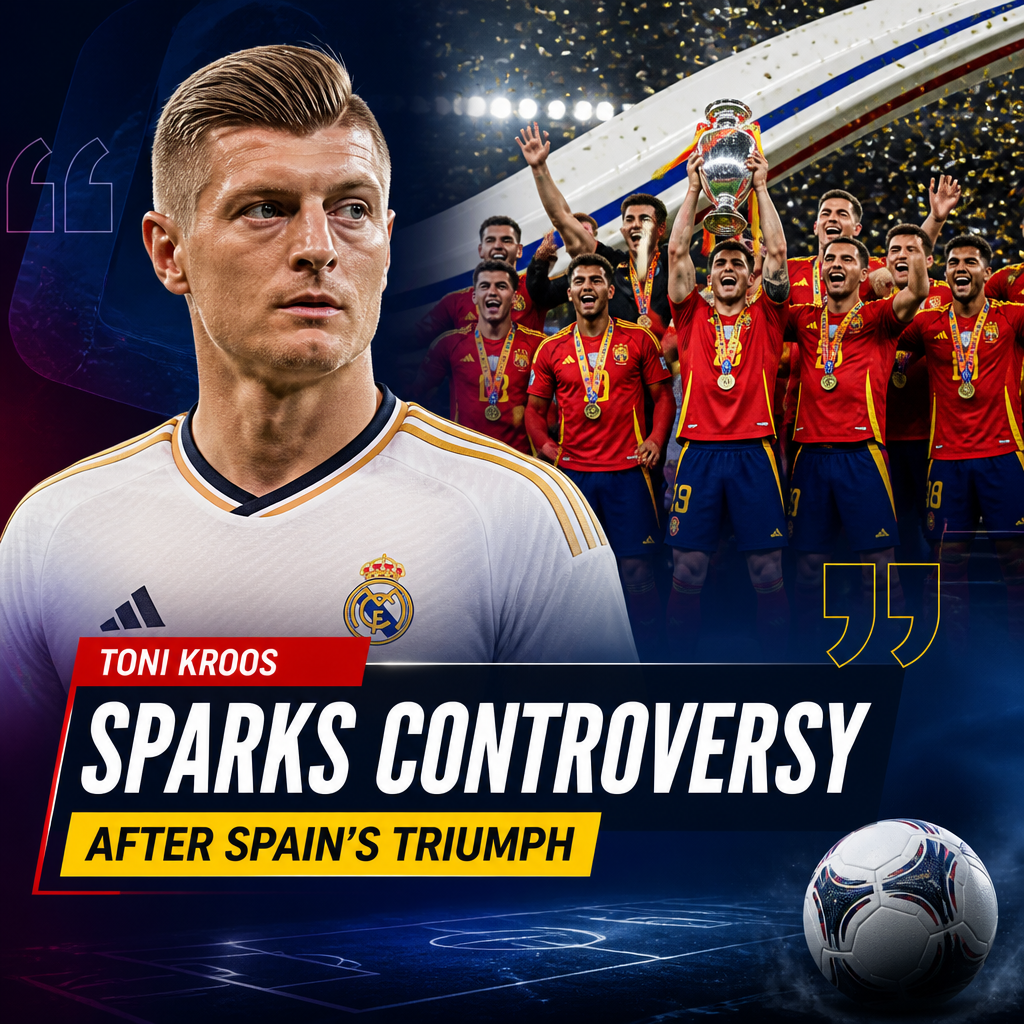
Toni Kroos needed just two words after the 2026 World Cup final to ignite a worldwide argument among football fans over what it really means for “football to win”.
Following Spain’s 1-0 victory over Argentina, the German star posted on X, formerly Twitter: “Football won”.
The succinct remark immediately went viral and has since become the focal point of a heated discussion about style, dominance and what constitutes a deserved champion, after one of the most one-sided World Cup finals in recent years.
Spain’s total control leaves Argentina pinned back
Spain, nicknamed La Roja, imposed their approach almost from kick-off, dictating tempo and territory while Argentina retreated into a deep, compact defensive shape.
Possession statistics underlined the imbalance: Spain enjoyed 65% of the ball compared with Argentina’s 35%. The European side attempted 20 shots in total, 12 of them on target, while Argentina mustered only two efforts and failed to produce a single shot on target during normal time.
Advanced analytics further highlighted Spain’s superiority. Argentina ended the first 90 minutes with an expected goals (xG) figure of 0.00, indicating they created virtually no meaningful scoring opportunities. Spain’s pressure finally told in extra time when Ferran Torres struck the decisive goal in the 106th minute.
It was this stark contrast in ambition and attacking threat that many fans and pundits linked directly to Kroos’s comment.
‘Football won’: style versus result
Kroos’s words were swiftly interpreted as an endorsement of Spain’s possession-based, proactive football over Argentina’s reactive, defence-first approach in the final.
Supporters who agreed with the midfielder argued that Spain had “tried to play football” throughout, constantly seeking to create chances and control the match, while Argentina appeared focused almost exclusively on containment.
Critics of the comment countered that football is ultimately about winning, regardless of style, and that Argentina’s tactical plan – however conservative – remained a legitimate way to approach a World Cup final.
But the almost complete lack of attacking output from the reigning world champions, especially across 90 minutes of normal time, meant Kroos’s verdict resonated strongly with many neutral observers.
Kroos had backed Spain – and was proved right
The former Germany midfielder had already publicly predicted that Spain would have the edge in the final. Before the match, Kroos suggested that if Spain scored first, the game would tilt decisively in their favour.
That scenario ultimately unfolded, albeit after two additional periods of extra time in which Spain continued to dominate. Torres’s winner merely confirmed on the scoreboard what the performance data had been indicating throughout: that Spain were in almost full control.
Kroos’s accurate pre-match assessment added another layer of interest to his “Football won” post, reinforcing the idea that he saw Spain’s style and plan as superior from the outset.
Personal history with Argentina adds extra weight
Kroos’s history against Argentina gave his remark even greater impact. He was one of Germany’s standout players in their 2014 World Cup triumph, when his side defeated Argentina in the final in Rio de Janeiro.
That personal connection – having already experienced beating Argentina on the biggest stage – meant his post was not interpreted as a casual throwaway line, but as a pointed reflection from someone who knows what it takes to win a World Cup final.
For many fans, his message summed up more than just one match: it revived a long-running debate about whether football’s highest prizes should reward those who take risks and seek to dominate, or those who prioritise pragmatism and results above all else.
