
Latest News
Canada wildfire smoke: World Cup 2026 final faces scrutiny as past matches show air quality risks

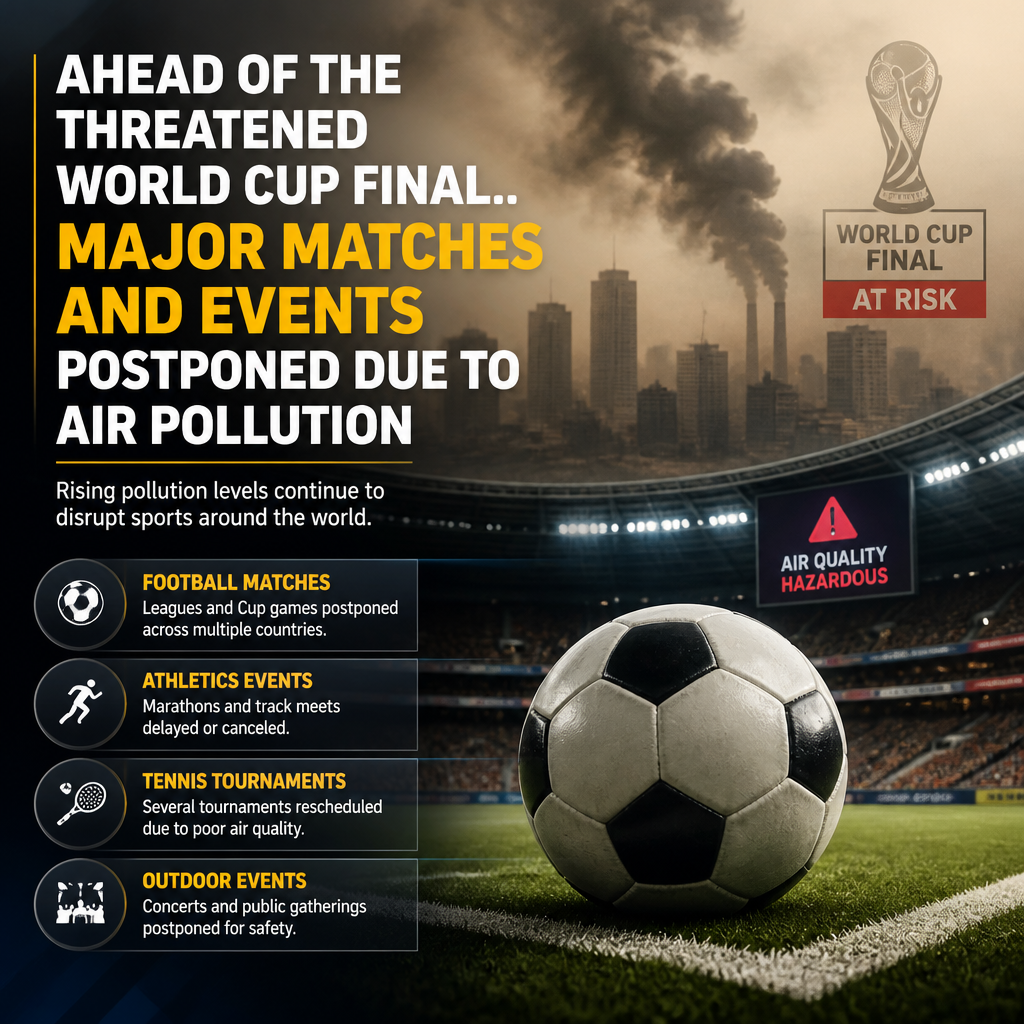
Spain’s World Cup 2026 final showdown with Argentina in New Jersey is set to go ahead as planned despite growing concern over smoke from Canadian wildfires – even as a string of recent football fixtures worldwide show how poor air quality can force dramatic last-minute postponements.
The final is scheduled for Sunday at MetLife Stadium, with hundreds of millions expected to watch globally and ticket prices on secondary markets reportedly surpassing $2m for some seats. Yet drifting smoke across parts of the north-eastern United States has triggered questions over whether conditions will be safe enough for players and fans.
So far there is no indication that world governing body Fifa is considering either postponing or relocating the match.
A report in British newspaper The Sun said there was no information to suggest that “Fifa” currently has postponement “on the table”, with organisers instead banking on improving weather conditions in the New Jersey area.
Safety concerns in the spotlight
The health and safety of players and spectators has become a central factor in football scheduling in recent years, as leagues and federations confront the growing impact of air pollution and wildfire smoke.
Iran’s top flight has been among the competitions most affected by poor air quality, particularly in the capital Tehran, where winter pollution often reaches hazardous levels.
In December 2015, two league matches in Tehran were called off after the Air Quality Index (AQI) exceeded internationally accepted thresholds. The decision followed recommendations from environmental authorities to avoid strenuous outdoor activity, including sports.
In November 2019, the league again stepped in, postponing Persepolis’ match against Nassaji Mazandaran along with another fixture in the capital for the same reason.
The pattern intensified in 2024 and 2025, when several high‐profile games in Tehran – including encounters involving giants Persepolis and Esteghlal – were cancelled as AQI levels climbed into categories officially described as “unhealthy” or “hazardous”. On those occasions, Iranian authorities also closed schools and suspended organised sporting events to protect public health.
North American leagues forced to act
North American football has likewise been repeatedly disrupted by smoke drifting south from Canadian wildfires.
Major League Soccer (MLS) announced on Thursday it was postponing Chicago Fire’s home game against Vancouver Whitecaps at Soldier Field after smoke from blazes in Canada and northern Minnesota pushed air quality into unsafe territory.
Around 40,000 fans had been expected to attend before the match was moved to 6 October.
News agency Associated Press reported that the change came after air quality reached “unhealthy” levels, prompting MLS to act “to protect the safety of players and supporters”. On the same day, the Canadian Premier League postponed the match between Forge FC and Pacific FC for identical reasons.
Earlier, in June 2023, the National Women’s Soccer League (NWSL) delayed the fixture between NJ/NY Gotham FC and Orlando Pride when the AQI hit 206 – a level classified as “very unhealthy”. The match was rescheduled for August under the league’s formal air‐quality policy, which uses AQI readings as a trigger for delaying or cancelling games.
Flares and visibility: European matches halted
Not all recent air‐quality incidents have stemmed from wildfires or urban pollution. In Europe, pyrotechnics in the stands have on occasion created similar visibility and safety issues.
In January 2025, a Champions League clash between Feyenoord and Bayern Munich was halted just 72 seconds after kick‐off because of dense smoke from flares. The thick haze drifted across the pitch, severely restricting visibility and making it difficult for players to track the ball.
In the same month, Real Madrid’s Champions League tie against French side Brest was delayed for several minutes before kick‐off owing to heavy smoke from flares in the stands, again raising questions over stadium safety protocols and crowd behaviour.
High stakes make World Cup move unlikely
Against this backdrop, the World Cup final in New Jersey is being watched closely by health experts and football authorities alike. While recent history offers multiple examples of games being moved or stopped due to air quality, the logistical and commercial scale of a World Cup final makes any change vastly more complicated.
Organisers are counting on forecasts that suggest conditions will improve in time for Sunday, while also weighing the immense sporting and financial significance of the event. The match is expected to break records for ticket pricing and global broadcast revenue, adding further pressure to keep the fixture in its scheduled slot and venue.
For now, Fifa has given no public sign that it is considering a postponement or relocation – but the experiences of Iran’s league, MLS, the NWSL and European competitions underline how quickly worsening air can force football authorities into “exceptional decisions” if player and fan safety is deemed to be at risk.
