
English Premier League
Barcelona’s midfield exposed as Paris Saint-Germain punish high-risk approach

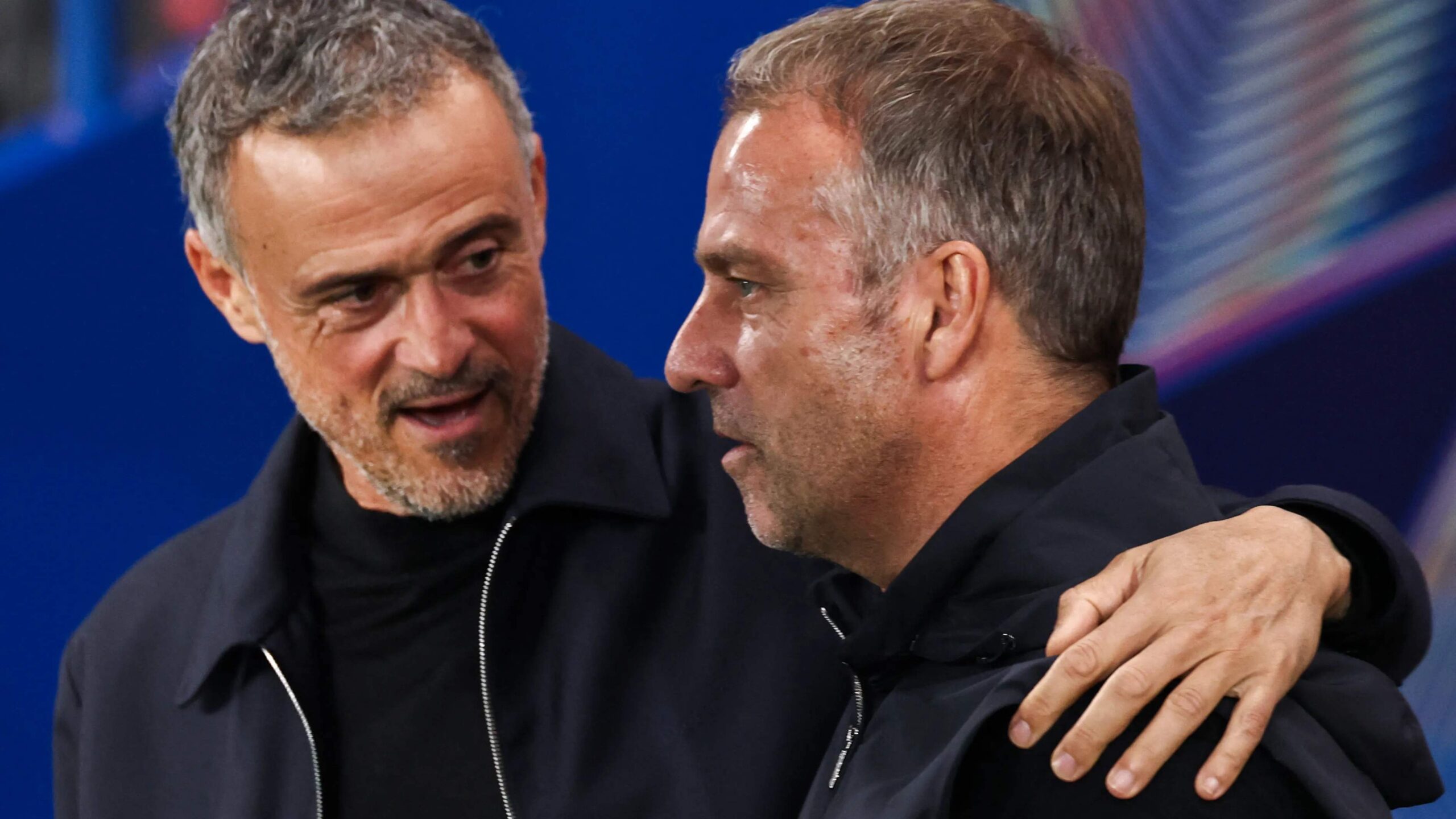
Barcelona’s 4-2 defeat by Paris Saint-Germain on Tuesday exposed serious weaknesses in their ability to control midfield, withstand pressure and protect the space behind their defence. Hansi Flick’s side twice recovered from falling behind, but could not maintain their balance as Paris Saint-Germain repeatedly reclaimed the initiative before completing a convincing victory.
The contrast was particularly clear after each Barcelona goal. Paris Saint-Germain responded quickly, continuing to create danger rather than allowing the game to turn in their opponents’ favour. For Barcelona, who hope to regain the UEFA Champions League, individual quality was not enough to compensate for a lack of collective balance in the most demanding moments.
Pedri left to carry too much
Barcelona struggled to control the centre of the pitch, while Paris Saint-Germain’s midfield trio of Vitinha, Joao Neves and Fabian Ruiz consistently offered passing options to the player in possession. Pedri appeared to be carrying much of the responsibility for linking the lines.
The issue was not simply a numerical disadvantage. Paris Saint-Germain’s movement enabled them to escape pressure, leaving Barcelona’s defence to retreat and protect space rather than win the ball in advanced positions. It underlined the difference between possession statistics and genuine control of a match.
According to Flashscore, Barcelona had 53% possession compared with Paris Saint-Germain’s 47% and recorded the better passing accuracy. However, the hosts had 22 shots to Barcelona’s 18, including 15 on target compared with five. Their expected goals (xG) figure was 3.73 against 2.19, while they created six big chances to Barcelona’s five.
That showed how Vitinha, Neves and Ruiz turned a smaller share of possession into sustained attacking threat.
High defensive line punished
Barcelona’s high press and advanced defensive line can create attacking advantages when executed effectively, but it also leaves spaces for opponents who move the ball quickly. Paris Saint-Germain exploited those gaps repeatedly.
Achraf Hakimi supplied a succession of dangerous crosses and created Ruiz’s fourth goal. He is now one assist away from matching Samuel Eto’o’s African Champions League record of 20, having moved level with Mohamed Salah, the former Liverpool player now at Trabzonspor, on 19.
Desire Doue also benefited from the space behind Barcelona’s defence, scoring Paris Saint-Germain’s first goal and delivering the corner for the second. He was named player of the match. Barcelona’s problem was therefore not only the position of the defensive line, but also the lack of pressure on the ball and the difficulty of blocking passing lanes.
Flick’s decision to leave Rodri Hernandez on the bench was influential, although it did not explain the defeat on its own. The manager said he wanted to rest Rodri after the midfielder had played all 90 minutes in the previous three matches, while stressing his confidence in Marc Bernal ahead of the classico against Real Madrid.
Rodri’s absence was significant because Barcelona needed someone capable of playing out under pressure, controlling the tempo, balancing midfield and defence, and retaining possession to calm Paris Saint-Germain’s rapid transitions. Barcelona did not replace those functions effectively, leaving Pedri with too many duties.
The decision to rest Rodri was not necessarily the mistake; the greater concern was that Barcelona lacked a structure capable of coping without him.
Substitutions raise questions
Removing Pedri and Raphinha after 60 minutes prompted questions, particularly with Barcelona needing to retain their ability to organise play and resist pressure. Rodri’s introduction did not solve the problem completely.
The decision to replace Chavi Espart after a positive performance, while leaving Anthony Gordon on despite a weak display, also invited scrutiny. Espart scored Barcelona’s equaliser after 74 minutes, registered one shot on target, posted an xG of 0.29, completed 43 passes at 84% accuracy, and made four tackles and five ball recoveries.
ESPN statistics showed that Gordon played the full 90 minutes but managed only 48 touches. He recorded no goal or assist, an xG of zero and an xA of 0.16, with no shots either on or off target. He won one duel and made one interception.
Paris Saint-Germain’s ability to resume attacking control whenever the score changed was the clearest lesson. Barcelona produced dangerous moments and showed determination by equalising twice, but relied more heavily on space and individual actions.
Paris Saint-Germain, by contrast, pressed effectively, exploited openings, continued attacking and remained composed after conceding. Barcelona still possess players capable of changing matches, but this defeat showed that greater balance is required to compete seriously for the UEFA Champions League.