
Latest News
World Cup final at risk as Canada wildfire smoke shrouds New York and New Jersey

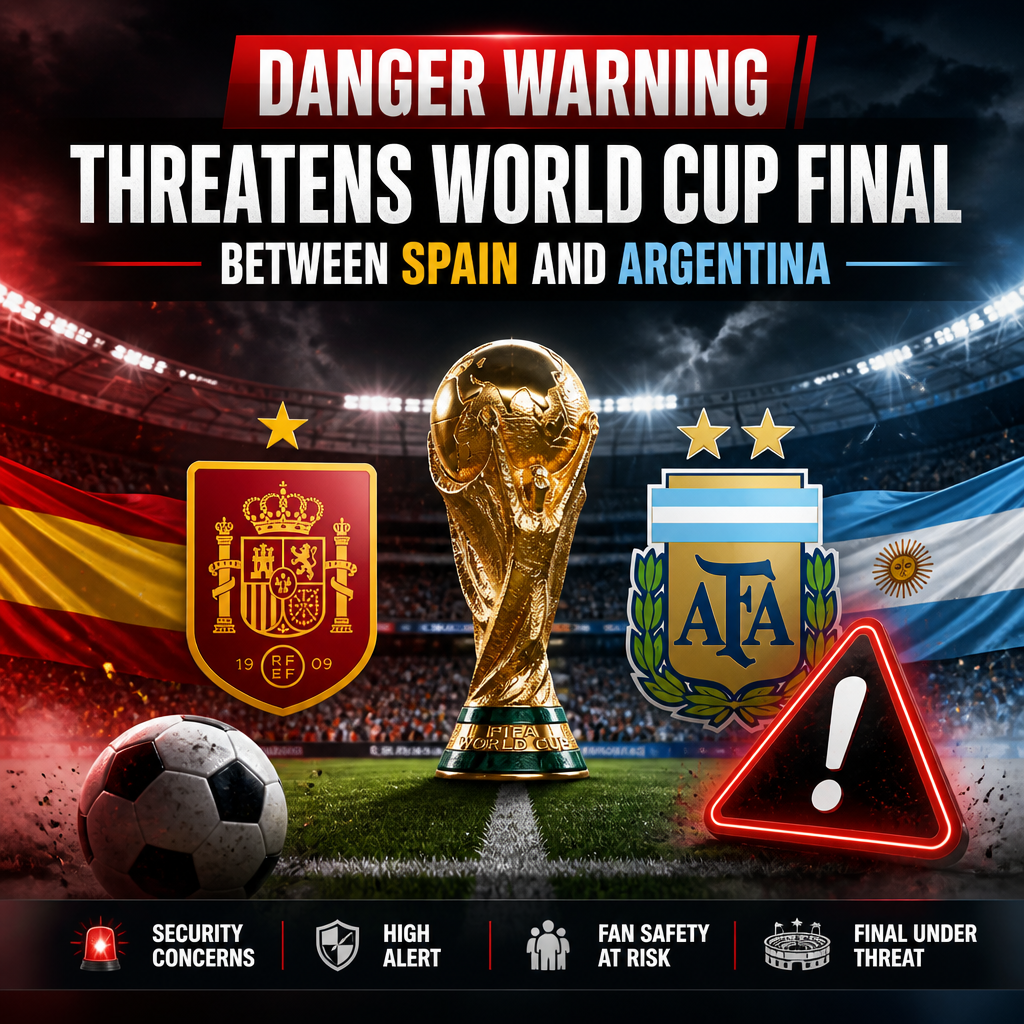
Thick smoke from Canadian wildfires has cast doubt over the World Cup final between Spain and Argentina, as New York and New Jersey grapple with hazardous air quality just days before kick-off.
Authorities in the United States are monitoring pollution levels around the clock amid fears that conditions could become unsafe for players and tens of thousands of fans at MetLife Stadium in New Jersey.
While weather forecasts currently offer some optimism, the final decision on whether the match can go ahead as scheduled will hinge on real-time air quality readings in the hours before the game, according to Spanish newspaper Marca.
Skyline shrouded and masks return
New York City woke up to an eerie scene this week, with the Manhattan skyline largely disappearing behind a dense grey haze. The smog has prompted many residents to wear face masks again – a sight not widely seen since the height of the Covid-19 pandemic.
The environmental threat has emerged just three days before the biggest game in world football, transforming what should have been a purely sporting buildup into a public health and logistics challenge for organisers and local authorities.
The smoke, drifting south from large wildfires burning in Canada, has spread across the wider New York metropolitan area, including northern New Jersey, where MetLife Stadium is located.
Health warnings and close surveillance of MetLife
So far, world governing body FIFA has not spoken publicly about the possibility of postponing the final. However, MetLife Stadium is under continual observation, not because of any immediate structural danger, but because air quality has become the key concern for health and meteorological agencies in both New York and New Jersey.
US authorities have issued formal air pollution alerts, urging people to cut down on strenuous outdoor activities and advising those with respiratory or heart conditions to take extra precautions.
Officials and organisers are closely tracking the Air Quality Index (AQI), the standard measure used to assess concentrations of harmful particles in the air. The AQI can fluctuate dramatically within hours, depending on wind speed and direction, making planning for a fixed-time event particularly complex.
Marca reports that on Thursday monitoring stations in parts of New Jersey recorded AQI levels ranging from “unhealthy for sensitive groups” to “hazardous” at certain periods of the day. Public health agencies consider air beyond specific thresholds unsafe for intense physical exertion.
No clear FIFA threshold for air pollution
One of the biggest unresolved issues hanging over the tournament is the lack of a clearly defined FIFA threshold for air pollution that would automatically trigger the postponement of a match.
Without a published minimum safety standard, any decision to delay or reschedule the final would likely fall back on recommendations from public health authorities and meteorological services if the AQI is judged to be at dangerous levels at kick-off time, Marca says.
This uncertainty places added pressure on both organisers and teams, who must prepare for a showpiece final under conditions that could change quickly.
Experts warn over elite athletes’ exposure
Medical specialists have voiced concern about the potential impact on players, especially given the intensity and physical demands of a World Cup final.
Dr Courtney Howard, an emergency physician and representative of the Global Climate and Health Alliance, told the Associated Press: “لا ينبغي للاعبين التدرب في الهواء الطلق عندما تصل جودة الهواء الى مستويات خطيرة. انصح بالبحث عن منشات داخلية ذات هواء نقي”.
She later reiterated the risk, emphasising the heightened vulnerability of elite footballers during high-intensity training and competition: “هولاء رياضيون من النخبة، ويستهلكون كميات هايلة من الهواء عبر رياتهم اثناء الاداء. لا ينبغي لهم التدرب في الهواء الطلق عندما تصل جودة الهواء الى مستويات خطيرة، وانصح بالبحث عن منشات داخلية تتمتع بهواء نقي”.
Her warning came after Spain, coached by Luis de la Fuente, completed an outdoor training session in East Hanover, New Jersey, despite the thick veil of smoke hanging over the area.
Forecast offers hope – but conditions remain volatile
Despite the anxiety, meteorological models offer some hope that conditions may improve before the final. Forecasts point to the likelihood of heavy rain on Saturday, followed by the arrival of a cold front early on Sunday. That change in weather pattern could help disperse much of the smoke currently settled over New York and New Jersey.
For this reason, neither US authorities nor FIFA are, for now, actively considering postponement of the final. However, experts stress that the behaviour of the smoke plume is closely linked to wind direction, making the situation highly changeable.
Air quality data continue to be updated on an hourly basis, and officials are preparing to make late-stage assessments if necessary.
Ultimately, it will not be the sight of a grey sky or the smell of smoke that determines whether Spain and Argentina walk out at MetLife Stadium as planned, but the precise AQI readings in the crucial hours before kick-off.
