
Latest News
Morocco to add 60,000 hotel beds as 2030 World Cup preparations accelerate

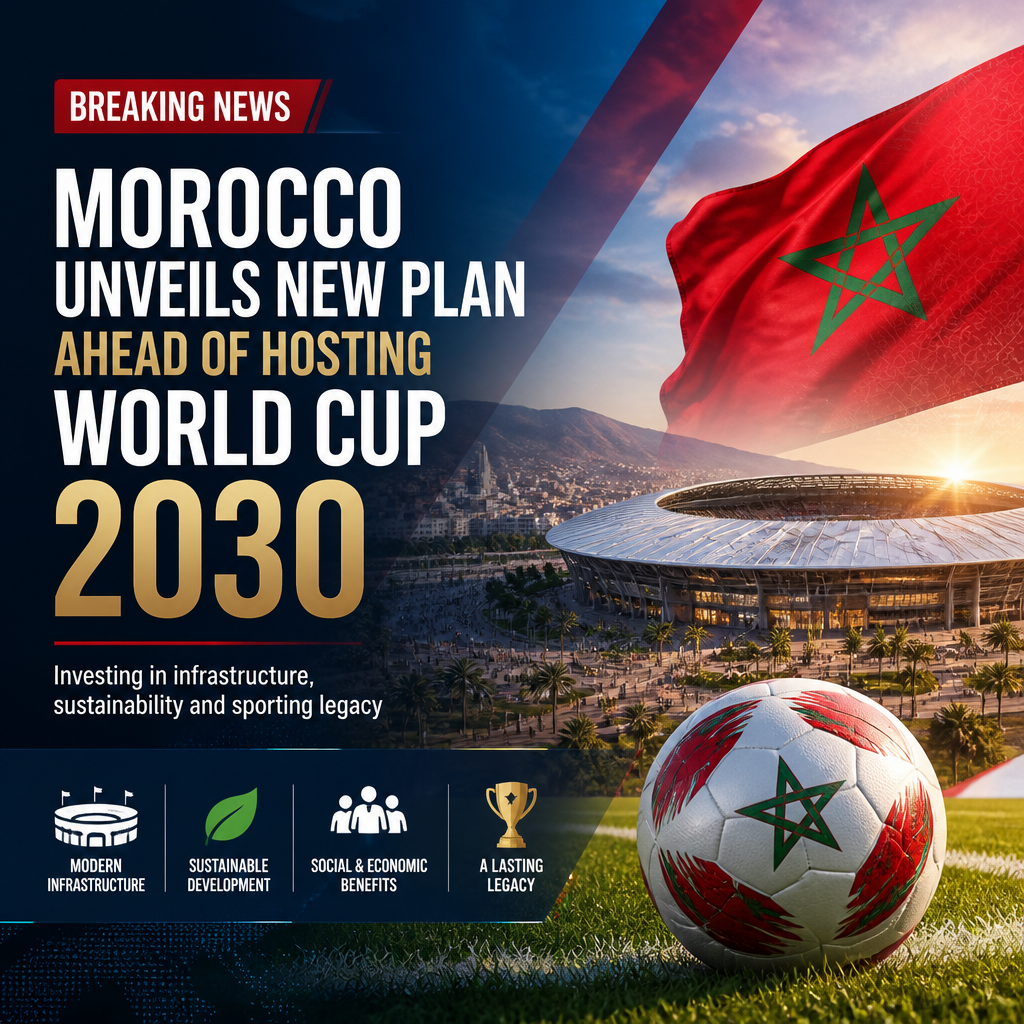
Morocco plans to expand its hotel capacity by around 60,000 beds before co‐hosting the 2030 World Cup, in one of the country’s most ambitious tourism drives in decades.
Tourism Minister Fatima Zahra Ammor said the increase – equivalent to about a fifth of Morocco’s current hotel capacity – is central to a broader strategy to turn the tournament into a long-term engine for economic growth rather than a one-off spectacle.
“We see the 2030 World Cup as an accelerator of development, and not a goal in itself,” she told Reuters.
World Cup as a catalyst, not the final destination
The decision comes as Morocco rides a wave of global attention following its historic run at the 2022 World Cup in Qatar, where the national team became the first African and Arab side to reach the semi‐finals.
Authorities are now seeking to convert that momentum into sustainable gains for a tourism industry that already provides hundreds of thousands of jobs and contributes about 7% of the country’s gross domestic product.
The 2030 World Cup will be co‐hosted by Morocco, Spain and Portugal, placing the North African nation at the centre of one of the biggest events in global sport and sharply raising expectations over visitor numbers and infrastructure readiness.
Massive infrastructure investment ahead of 2030
To prepare, the Moroccan government is investing more than $20bn in a wide package of infrastructure upgrades.
The programme covers new and expanded rail lines, roads, airports, stadiums and other facilities designed both to serve World Cup fans and to support long-term economic development.
Official data show that Morocco has already added 45,000 hotel beds over the past four years, bringing the country’s current capacity to more than 300,000 beds. The planned 60,000-bed expansion would push that figure significantly higher, positioning the country to host far more visitors during and after the tournament.
Ammor stressed that the coming phase of growth will not only be about quantity, but about reshaping where visitors come from and where they go inside the country.
Targeting new markets: China, US and the Middle East
The next stage of Morocco’s tourism strategy will focus on attracting more travellers from China, the United States and Middle Eastern countries.
According to the tourism minister, this will involve improving air connectivity and widening the network of international routes serving Moroccan cities.
By boosting direct flights and reducing travel times from key long‐haul markets, Rabat hopes to diversify its visitor base beyond traditional European source countries and make Morocco a more prominent stop on global travel itineraries.
Beyond Marrakech and Agadir: diversifying destinations
At the same time, Morocco is working to spread tourism beyond its best‐known holiday centres such as Marrakech and Agadir.
A central plank of this policy is the transformation of the capital, Rabat, into a major hub for cultural and sporting events as well as business travel.
The city, which boasts historic landmarks, museums and modern sports facilities, is being positioned as a flagship destination capable of hosting international conferences, cultural festivals and major sporting fixtures linked to the World Cup and beyond.
This diversification, officials argue, will help spread the economic benefits of tourism more evenly across regions and reduce pressure on already popular resorts.
Long-term value at the heart of strategy
Ammor underlined that Morocco’s World Cup preparations are ultimately geared towards building a tourism model that delivers durable benefits rather than short-lived gains.
“We need to implement investments that create sustainable and long‐term value for Moroccan tourism,” she said.
With billions of dollars in infrastructure projects under way, tens of thousands of new hotel beds planned, and a concerted push into new markets, Morocco is betting that football’s biggest tournament can anchor a broader transformation of its tourism sector and wider economy.
