
Nigeria Players Abroad
Toni Payne and Lesley Ugochukwu: Data points to mixed challenges after moves to Inter Women and Galatasaray

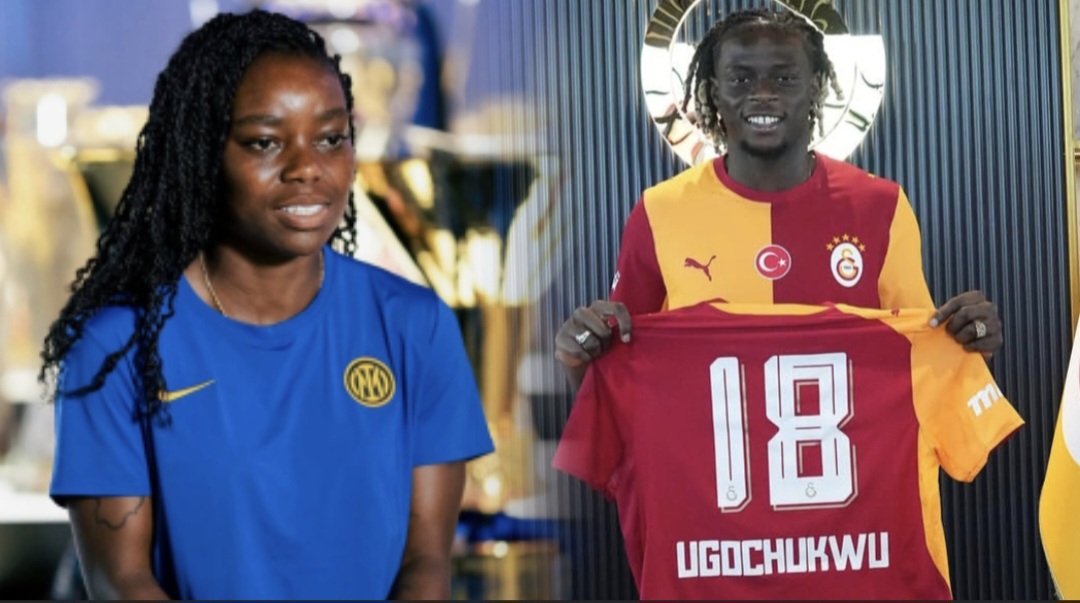
Toni Payne’s switch to Inter Women and Lesley Ugochukwu’s loan move to Galatasaray both look like smart pieces of business on paper – but performance data suggests each will face specific tactical and technical tests at their new clubs.
Payne, 31, joins Inter Women on a two-year deal after a season with Everton in the Women’s Super League, while 22-year-old Ugochukwu heads to Istanbul on loan following a full Premier League campaign at Burnley. Both players have Nigerian roots; Payne is a full Nigeria international with the Super Falcons, while Ugochukwu, born in Rennes to Igbo parents, has represented France from under-18 to under-21 level and remains eligible to switch allegiance to Nigeria at senior level.
Analysis of their 2025-26 performances offers a detailed picture of where they could thrive – and where they may struggle – in Serie A Femminile and the Turkish Super Lig.
Payne’s strengths lie in carries and box entries
Payne’s numbers from Everton underline a winger with clear attacking attributes but some notable gaps. She started 13 league matches and played more than 1,200 minutes across 19 appearances, contributing just one assist – a modest return for a creative player.
Her standout qualities are in ball progression. Data shows she excels at carrying the ball up the pitch, driving into the penalty area and generating box entries, repeatedly putting her teams into advanced positions. These runs underline her capacity to create attacking situations even when her final ball or finish does not always match the build-up.
From wide positions she compares reasonably with other WSL wingers in terms of dribbling volume and her ability to resist pressure while advancing play. She is particularly effective when dribbling inside the opposition area, a trait that can help unlock compact defences.
However, the numbers also indicate that she rarely turns those dribbles into high-quality chances. Her actions in the right-sided attacking lane are broadly average and she has found it difficult to influence games from the attacking left flank.
Finishing and defensive work raise questions
The most concerning aspect of Payne’s profile is her end product in front of goal. Her finishing is rated well below that expected of a wide forward, with shots too often failing to hit the target and infrequent goals even from prime “golden zone” positions close to goal. Compared with other wingers, she underperforms in converting promising situations into actual scoring returns.
Out of possession, the data is even more stark. Payne’s pressing volume and effectiveness are low, suggesting she struggles to win the ball back or apply consistent pressure. Her defensive output in the right wing and right half-space is steady relative to her peers, but drops off sharply when she is asked to defend higher up on the attacking right wing.
There is some contextual mitigation: Everton frequently operated in a lower defensive block and were not one of the WSL’s most aggressive pressing sides. Even so, her overall defensive engagement and contribution to build-up play are limited, with comparatively few touches in key attacking zones and below-average involvement in central attacking midfield and wing areas.
Passing profile fits Inter – if pressing improves
Payne’s passing data offers more optimism for Inter Women. She is a reliable crosser and can deliver telling balls from advanced wide positions. Inside the opposition penalty area she is capable of finding dangerous passes, hinting at a playmaker’s instinct in tight spaces.
Her influence wanes in deeper and wider zones, especially on the left, where her passing becomes less effective and generates less threat. That aligns with the picture of a player best used high and wide or cutting in from the right, rather than as a deeper wide playmaker.
For Nigeria, Payne has been deployed in creative roles, notably drawing praise from Sarina Wiegman during the 2023 FIFA Women’s World Cup. She is expected to occupy similar positions again when she features at the 2026 Women’s Africa Cup of Nations (WAFCON). At international level her strengths on the ball are often accentuated, but the underlying club data still flags her lack of touches, reduced involvement in build-up and limited defensive intensity as ongoing issues.
Inter Women’s style could both suit and expose her. The Italian club favours patient circulation, a higher pressing structure and a balanced attacking approach mixing crosses and carries. That framework should showcase her carrying and box-entry ability – areas in which she ranks highly in the WSL – and make use of her crossing from advanced areas.
However, the emphasis on counterpressing and collective work without the ball will demand improvements in her pressing and overall involvement. Payne appears a natural stylistic fit in possession, but must significantly raise her defensive work-rate and consistency if she is to fully justify Inter’s investment at this stage of her career.
Ugochukwu arrives as depth option in stacked Galatasaray midfield
Ugochukwu’s move to Galatasaray follows a demanding Premier League season with Burnley in 2025-26, where his versatility was fully tested. He played over 2,500 minutes across 35 league matches, starting 27, scoring three goals and providing two assists. He also received three cards (two yellow, one red) and featured in up to four positions, including nearly 150 minutes as a right winger.
Any assessment of his prospects in Istanbul must be framed by the strength of Galatasaray’s existing midfield, which includes Ilkay Gundogan, Lucas Torreira and Gabriel Sara. Those players bring a blend of experience, creativity and control. Compared with them, Ugochukwu’s numbers suggest a midfielder with potential rather than someone ready to displace established starters immediately.
The club is unlikely to expect him to become the primary playmaker from his first day in Turkey, unless he adapts exceptionally quickly. Instead, his role is more clearly defined as adding energy, physical presence and reliable depth across a long domestic and European campaign in the Super Lig.
Defensive profile matches Galatasaray’s pressing approach
Galatasaray operate with an aggressive high press and aim to recover possession quickly before building attacks with patient passing. Ugochukwu’s data points to a player who can support that strategy.
He covers ground willingly, is generally dependable in tackles and one-on-one duels, and has demonstrated an ability to disrupt opposition moves in central areas. While he does not top every defensive metric, his overall defensive profile is competitive when set against Galatasaray’s current midfield options.
His passing patterns also fit the team’s needs. Ugochukwu is more comfortable circulating the ball in deeper zones than attempting frequent line-breaking passes in the final third. Rather than serving as a creative hub, he helps maintain possession and keep attacks flowing, which can complement more inventive team-mates such as Gundogan and others.
Creativity and final-third threat remain works in progress
Where Ugochukwu lags behind his new midfield colleagues is in attacking influence. His creative figures are below average for his role, particularly in chance creation and advancing the ball into the most dangerous areas. He registers fewer touches in the opposition penalty area than many comparable midfielders and his expected goal involvement is relatively low.
Analysis using Twelve Football’s Earpiece tool reinforces this gap: his defensive contribution stands up well, but there is a clear shortfall in creative output and goal threat compared with Galatasaray’s existing options.
This does not preclude success in Turkey, but it shapes expectations. The signing appears designed more to reinforce the midfield group than to transform it. If Ugochukwu adapts quickly to the pace and physicality of the Super Lig and can gradually add more attacking edge to his game, he has the attributes to become an important squad member, even if he does not immediately secure a regular starting spot.
Shared challenge: matching tactical demand with development
Taken together, the data-driven picture of these two moves is nuanced. Ugochukwu’s loan to Galatasaray puts him in a high-intensity environment with a strong pressing culture, which could accelerate his development but will also increase his defensive workload and demand better decision-making on the ball.
Payne’s transfer to Inter Women, meanwhile, appears tactically logical in terms of possession and attacking structure, yet places her under pressure to raise her pressing levels, improve her finishing and become more consistently involved across 90 minutes.
Both players have been trusted by major clubs to contribute in competitive environments. How quickly they adapt their games to the demands of Serie A Femminile and the Super Lig will go a long way to determining whether these moves are judged as stepping stones to the next level or missed opportunities.
