
Nigeria Players Abroad
Olofinjana urges Nigeria to use World Cup absences to rebuild for lasting success

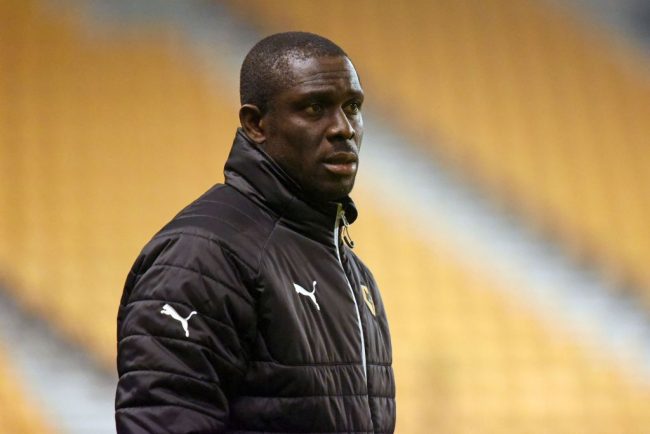
Former Super Eagles midfielder Seyi Olofinjana says Nigeria must use its failure to reach two successive World Cups as an opportunity to create sustainable football structures and establish a clear national playing identity.
The former Hull City player believes the country should focus on long-term planning, professional competence and accountability when appointing football leaders, rather than relying on sentiment or reputation.
Speaking to Brila FM, Olofinjana said Nigeria’s national teams currently lacked a consistent tactical philosophy, with no obvious style connecting the age-group sides to the senior Super Eagles.
He argued that the country’s depth of football talent had often masked weaknesses in preparation and administration, allowing Nigeria to depend on individual ability instead of building a reliable system.
“I like a lot of what is happening in the backend of not going to two World Cups because I think if we had gone to the two, we will still be where we are,” Olofinjana said.
“Nigeria is such a wealthy country, a lot of the time, we solve all these problems without any preparation. It has given us an opportunity to reflect on our national team, what are we doing? What does the green-white-green mean?
“The Super Eagles shirt is no longer heavy, it used to be heavy when we wore it.”
Olofinjana said representing Nigeria should involve more than personal motivation, with players expected to understand their responsibilities and contribute to a collective identity.
“A lot of what they do when they wear the shirt is self-motivation and collective responsibility. If anybody is going to be in the World Cup, they have to know what they are doing.”
His comments come as Nigeria considers how to reshape its football administration and international programme after missing out on the past two World Cups. Olofinjana believes those setbacks can provide the time and pressure needed to examine the country’s approach to developing and managing its national teams.
He also stressed the importance of creating structures that can support success over a sustained period, rather than attempting to solve problems only when major competitions are approaching.
The former midfielder won 48 caps for Nigeria between 2000 and 2011. A tall, energetic and hard-working central midfielder, he played an important role during a significant period for the Super Eagles.
Olofinjana featured prominently in several Africa Cup of Nations tournaments and World Cup qualifying campaigns during his international career. His experience with the national team has informed his view that Nigeria’s football ambitions require a stronger foundation, a defined style and leaders selected for their expertise.
For Olofinjana, the challenge is to ensure that Nigeria’s considerable football talent is matched by proper preparation and effective administration. Without those foundations, he believes the country risks continuing to rely on its natural resources of players instead of translating them into sustained international success.
