
English Premier League
Why the Ballon d’Or remains football’s most disputed prize

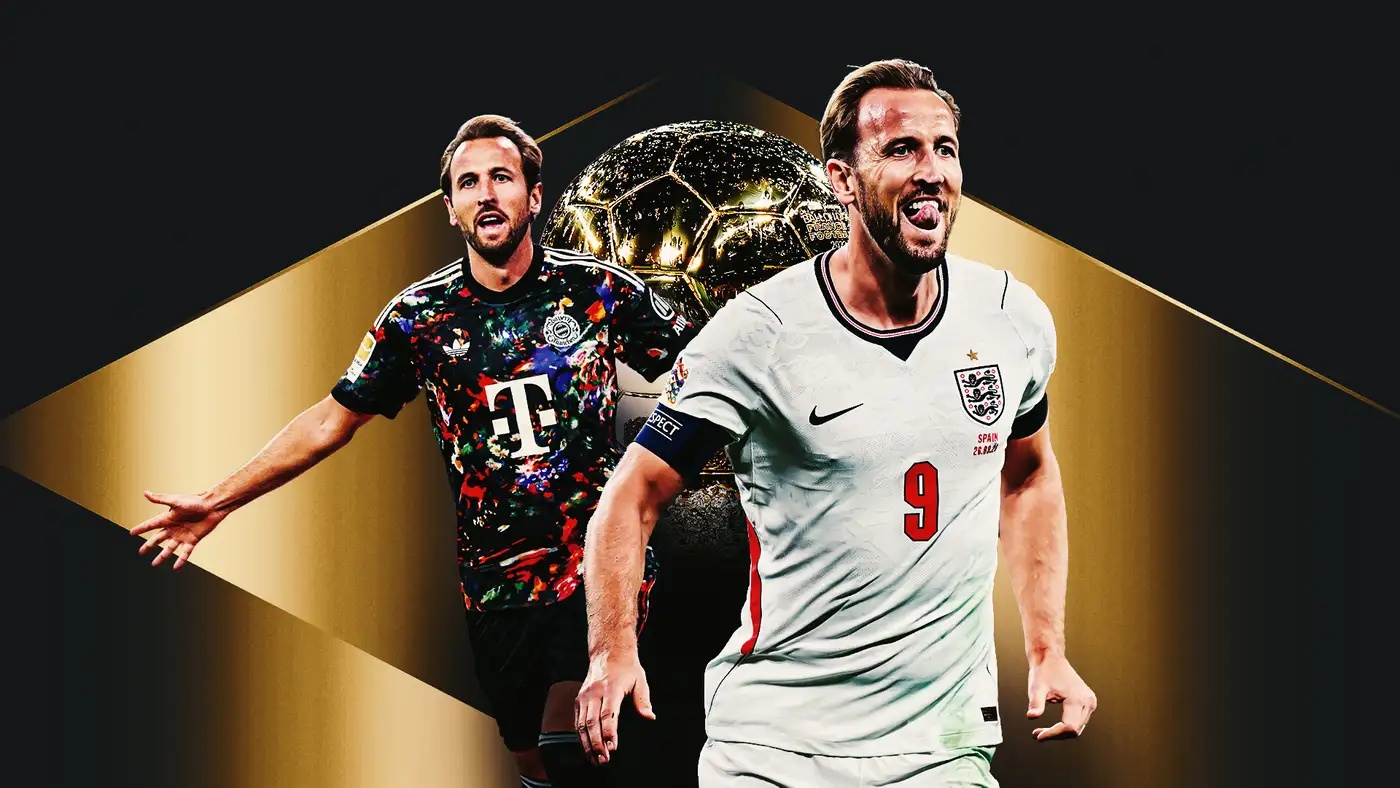
” A farcical show with only one beneficiary” sums up my view of the Ballon d’Or. I am not referring only to the latest edition, or to the success of one player over another, but to the award since its creation and the exaggerated importance attached to it.
Harry Kane, the Bayern Munich forward, won the 2026 Ballon d’Or, prompting the familiar debate surrounding a prize which, in my view, does not justify such an intense reaction.
An award created to boost sales?
Reports about the Ballon d’Or’s origins have often suggested that France Football created it partly to increase the magazine’s sales at the end of the year, as the festive period approached. The award also provided additional income, particularly through advertising.
As the organisation behind the idea, the magazine set the rules and continues to control every major aspect of the prize. Until 1994, it required the winner to be a European player, despite the presence of many world-class footballers from elsewhere in European leagues.
France Football has also controlled the list of nominees throughout the award’s history. Its editors, with limited involvement from others, select the candidates before handing them to the voters. That process has regularly caused controversy because some choices appear to be influenced by factors unrelated to performances on the pitch.
The 30-player shortlist for the latest edition, for example, omitted several notable names while including Sadio Mane, who was not the best player for either his national team or Al Nassr.
Questions over the voters
France Football highlights that voting rights are given to 100 journalists, representing the top 100 countries in the FIFA rankings. That implies a journalist from the country ranked 101st would be less capable of judging football, which is difficult to justify.
The number and geographical spread of voters have changed over the decades. Initially, only journalists working in Europe took part, before the electorate was expanded.
There are also no publicly stated criteria explaining how the journalists in those 100 countries are selected. Instead, the magazine contacts them directly and invites them to vote.
The published results frequently reveal how personal loyalties can shape the outcome. France Football announces each journalist’s choices, exposing decisions that can undermine confidence in the final result.
Some Arab journalists are accused of voting for Arab nominees to avoid a hostile public reaction. Similar patterns exist elsewhere, with voters favouring players from their own national teams because of pressure from supporters or other considerations.
Club allegiance can also play a role. A journalist who supports Real Madrid may favour a Madrid player, while a Barcelona supporter is likely to prefer a Barcelona player, particularly when they are not required to vote for a player from their own country.
Accusations of discrimination
The magazine faced accusations of discrimination for decades, beginning with the exclusion of non-European players until 1994. The rules were changed the following year after widespread criticism, and George Weah became the first African winner under the revised system.
That earlier restriction means several great players are absent from the list of winners. The question remains: was a player of Diego Maradona’s stature not worthy of the Ballon d’Or?
George Weah himself later argued that Samuel Eto’o was denied the award after Barcelona’s treble-winning season, while Didier Drogba missed out after winning the Champions League with Chelsea. The issue returned when Vinicius Junior lost to Rodri, with some linking the decision to the Brazilian’s campaign against racism and the controversies surrounding him at the time.
Many other players have been cited as victims of the prize’s inconsistencies, including Andres Iniesta, whom the magazine later apologised to, as well as Franck Ribery, Vinicius, Erling Haaland, Robert Lewandowski and Xavi Hernandez.
The justification for decisions also changes. At times, winning the World Cup is presented as decisive; in other years it is disregarded. Goals and individual performances can be prioritised in one season and overlooked in another, raising doubts about whether the published criteria are applied consistently.
Campaigning and commercial interests
The award increasingly resembles an election campaign. Clubs have launched efforts to promote their players, sometimes selecting one or two candidates, as happened with Lamine Yamal and Rodri this year.
Several journalists who have voted in previous editions have also described attempts to influence their decisions, including approaches from intermediaries urging them to support a specific player.
This makes the winner resemble the victor in an election where different voters apply different standards.
France Football also introduced a vote this year to select the greatest Ballon d’Or winner, charging participants one euro. In my view, the move exploits the enduring rivalry between Cristiano Ronaldo and Lionel Messi to generate revenue from a poll of little real significance.
The central questions therefore have simple answers. Are there permanent, convincing and consistently applied standards for selecting nominees? No. Are there clear criteria for choosing voters and ensuring every country is represented? No. Is voting always free from emotion, allegiance and outside considerations? No.
If those conditions are absent, can the winner always be called the best player in the world? In my view, again, no.
The Ballon d’Or should not be treated as a definitive measure of anything. Supporters and journalists watch the matches themselves, so there is no need to rely on the opinion of one journalist, or a group chosen by a magazine whose commercial interests are part of the debate.
That view is not based on the result of the latest edition, or on one player winning while another lost. It is a judgement on the award as a whole: a show that, in my opinion, does not possess genuine value.