
English Premier League
Ancelotti’s Brazil role is not to protect Barcelona players, says football analysis

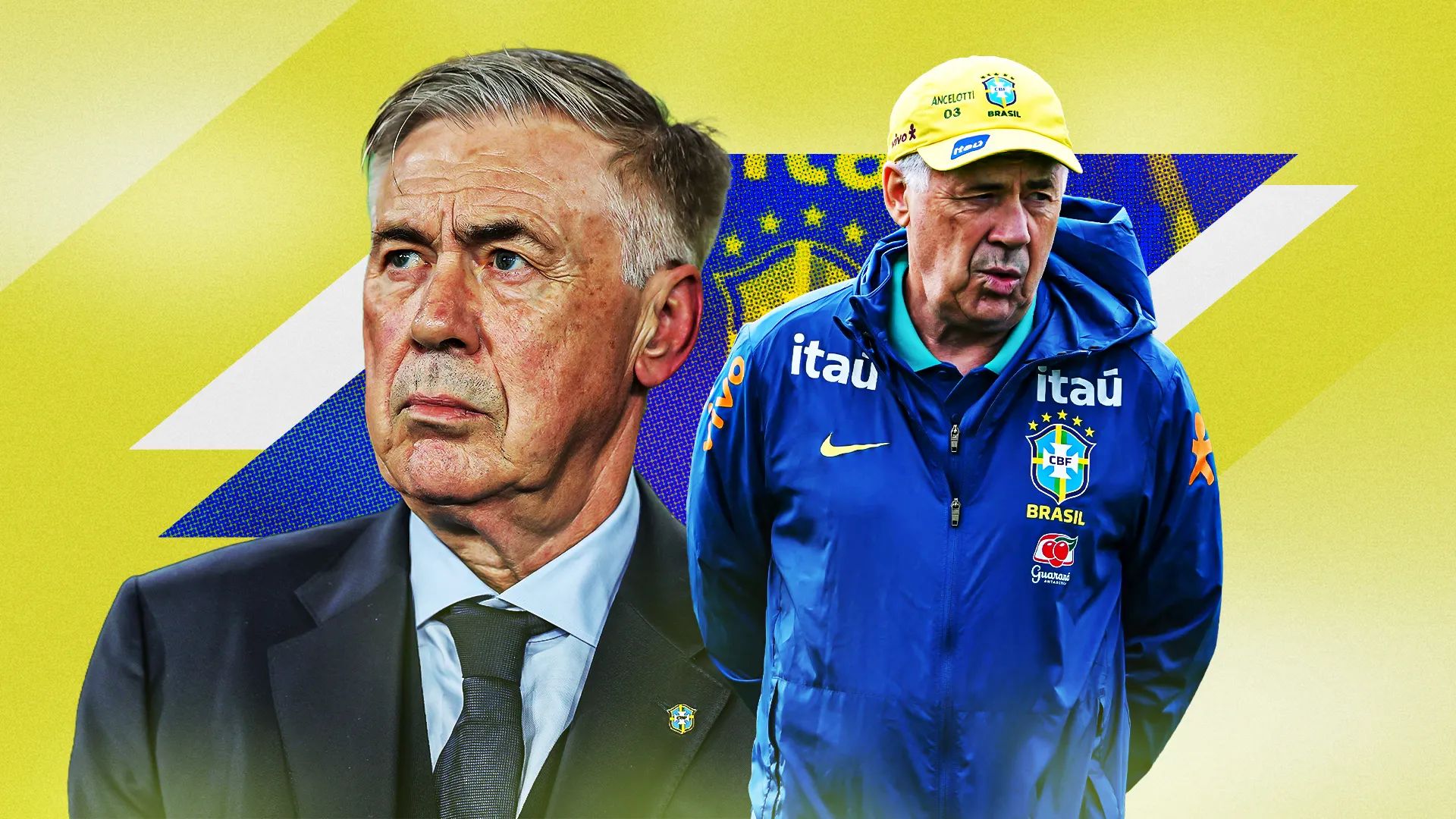
The reaction to Raphinha’s injury has produced a wider argument about journalism, club loyalties and the responsibilities of national-team managers. Some readers criticised coverage of the Barcelona forward and asked why Kooora had not published a similar article about Kylian Mbappe, while others concluded that Carlo Ancelotti was responsible for Raphinha’s injury.
Comments included: “From the article, we can tell the writer is a Real Madrid fan”, “The writer is part of the Madrid herd” and “Why didn’t you write about Mbappe’s injury?”
Yet the precise nature of Raphinha’s injury remains unknown. Despite that, some have already assigned blame and suggested Ancelotti might have acted differently if the player had been wearing a Real Madrid shirt.
The answer to why one article was written and not another is straightforward: a journalist is not required to write about Mbappe and Raphinha every time something happens to either player.
Kooora is a large media organisation with journalists, editors and separate departments covering numerous events, competitions and sports at the same time. The website has published dozens of reports about Mbappe, Real Madrid, Barcelona and other clubs and national teams. But some readers appear to want every story to be written by the same reporter, despite the fact that one person cannot cover every injury, statement, match and player.
Judging articles by the writer’s supposed club allegiance has also become increasingly common. Writing about Raphinha supposedly makes someone a Real Madrid supporter; writing about Mbappe makes them a Barcelona fan. Criticising a player means opposing his club, while defending him means belonging to a “herd”.
Ancelotti’s responsibility
The question of why Ancelotti played Raphinha in friendlies despite long travel and the player’s injury history is legitimate. But immediately describing the decision as negligence, or claiming “he would not have done that if the player were at Real Madrid”, goes beyond the available evidence.
Ancelotti is the manager of Brazil. His responsibility is to prepare the national team for its upcoming competitions, not to manage the workload of Barcelona or Real Madrid players on behalf of their club coaches.
International breaks are almost the only opportunities for national-team players to train together. It is therefore normal for a manager to want to see his best players, test his ideas, develop his formation and improve understanding within the squad.
Would Ancelotti have been expected to tell Raphinha to rest because Barcelona needed him after the break? Should Luis de la Fuente have told Lamine Yamal not to play because Barcelona had matches ahead? Should Zinedine Zidane have protected Mbappe, Ousmane Dembele and Michael Olise from international duty to protect their clubs?
Applied consistently, that argument would make national teams impossible to operate. It would also ignore the players themselves. There is no evidence that Raphinha wanted to rest for Barcelona, or that Mbappe would rather avoid playing for France to preserve his fitness for Real Madrid.
For many players, representing their country is an honour and a source of pride, while international competitions are a central part of their careers.
Thomas Tuchel, the manager of England, rejected the idea of routinely resting players for their clubs. He said he did not receive calls from Premier League managers telling him how to use their players, and that, when he was a club manager, he would not have expected calls from national-team coaches.
Tuchel also questioned why a manager would suggest that a player could withdraw, play only one half or take a rest, describing that approach as “madness” and stressing that the national team wants to win too.
Injuries are an unfortunate part of football. A player can return safely from international duty and then be injured in a domestic match days later. That does not automatically prove that either manager acted negligently.
When the facts are unknown, the responsible response is to wait, discuss possibilities rather than invent motives, and avoid speaking on behalf of the player. Journalism is not about confirming the story supporters prefer; it is about reporting what can be established.
Not every injury is a conspiracy, not every poor-timed incident reflects bad faith, and not every journalist who writes about one player but not another belongs to a particular “herd”. Sometimes the most mature conclusion is simply that the facts are not yet known.